
Vehicles
Why Used EVs Are Suddenly So Cheap
Used electric cars can be real bargains, but only if the battery, warranty, charging routine and ownership costs fit your life.
There is a strange moment happening on used-car lots.
A car that once looked like the future is sitting under fluorescent lights with a price tag that makes people pause. A Tesla Model 3. A Chevrolet Bolt. A Volkswagen ID.4. A Ford Mustang Mach-E. Maybe a Hyundai Ioniq 5 with more range than most people use in a normal week.
Not long ago, these cars were expensive statements about where driving was going.
Now some of them look almost suspiciously affordable.
That is the tension behind the used EV market in 2026. Used electric cars are cheaper because the market has changed fast, but not because every risk disappeared. The low price is not always a gift. Sometimes it is the market admitting it does not know exactly how to value battery health, charging convenience, warranty coverage, insurance costs and future resale demand.
In other words, the used EV bargain is real.
So is the homework.
The Sticker Price Started Telling a Different Story
For years, EVs had a simple public image: clean, quick, quiet and expensive.
That image made sense. New EVs often arrived with high sticker prices, advanced tech, big screens, fast acceleration and a sense that early buyers were paying for the future before the future went on sale. The first owner absorbed the uncertainty. The second owner is now seeing the receipt.
Used EV prices fell because several forces arrived at once.
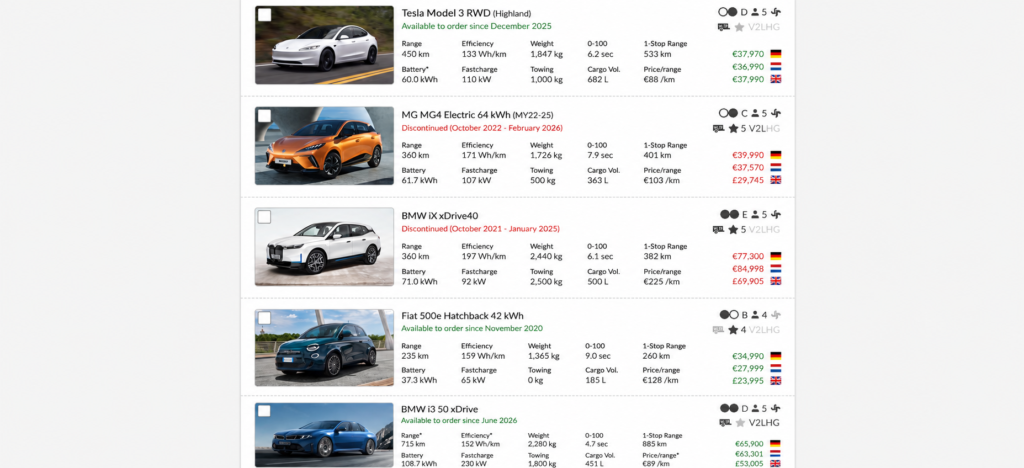
New EV prices came down. Discounts grew. Tesla cut prices and forced everyone to think differently about residual value. More brands entered the market. Charging standards started shifting. Federal incentives changed. Buyers became more cautious. Then a wave of leased EVs began moving toward the used market.
That is a lot for one price tag to digest.
A gas car usually gets cheaper because it gets older, gains miles and competes with newer versions of itself. A used EV does all of that too, but it also ages inside a technology cycle that has been moving unusually fast.
The car did not necessarily become bad.
The market became impatient.
The First Owners Paid Early-Adopter Prices
The first wave of mainstream EV buyers bought into a different market.
Interest was high. New models were scarce. Gas prices were volatile. Automakers were still learning how to price electric cars beyond Tesla. Dealers were learning how to sell them. Buyers were learning how to live with them.
Many early owners paid for range, novelty, acceleration, software and the feeling of being ahead of the curve.
Then the curve moved.
Newer EVs gained better charging, better range, better software, better lease deals and sometimes lower prices. That made older EVs compete not only with used gas cars, but with newer electric cars that had learned from the first wave’s compromises.
Depreciation is never polite. With EVs, it has been especially blunt.
For a buyer, that can be useful. The first owner may have paid for the awkward part of the transition. The second owner may get a quiet, quick, low-maintenance car at a much lower price.
But that only works if the discount is bigger than the inconvenience.
Tesla Reset the Floor
No used EV story makes sense without Tesla.
Tesla did not just sell a lot of EVs. It trained shoppers to compare electric cars in a particular way: range, charging network, software, acceleration and price. When Tesla cut new-car prices, especially on high-volume models like the Model 3 and Model Y, it did not just affect new Teslas.
It pulled on the whole used-EV market.
If a new EV becomes cheaper overnight, a used EV cannot pretend yesterday’s value still holds. Lease residuals look too optimistic. Trade-in values fall. Competing brands have to discount. Dealers suddenly have cars whose book values feel out of date before the windshield sticker is printed.
That is one reason a used EV can look strangely cheap even when the car itself is not broken.
The reference point moved.
In a normal market, depreciation is a slope. In the EV market, some models found a staircase.
The Lease Wave Is Coming Back
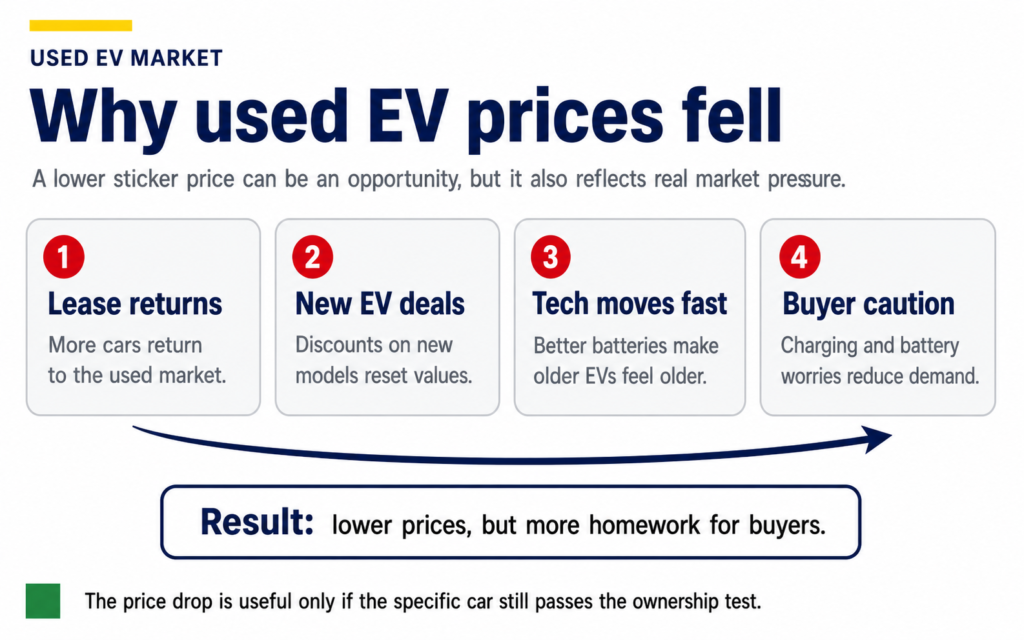
The next force is supply.
Car and Driver reported that more than 1.1 million EVs were leased between January 2023 and September 2025 under favorable terms, with leasing reaching nearly 58% of new EV transactions by mid-2025. Those leases do not vanish. They mature.
As three-year leases end, many of those cars return to dealers, auctions and certified pre-owned programs. That matters because a lease return is often exactly what used-car shoppers want: a relatively new vehicle, predictable age, moderate mileage and a documented path back into the market.
But when many similar cars arrive at once, prices feel pressure.
This is especially true if the lease buyout price is higher than the car’s current market value. In that case, the original driver may return the car rather than buy it. The dealer or captive finance company then has to place that EV into a market that may already have plenty of similar EVs.
More choice is good for buyers.
Too much similar inventory is not good for resale values.
That is how a car can be both a better deal and a worse asset at the same time.
The Tax Credit Math Changed
Incentives used to make some used EVs look even better.
The IRS says the Previously-Owned Clean Vehicle Credit is not available for vehicles acquired after Sept. 30, 2025. For eligible vehicles acquired on or before that date, the credit could equal 30% of the sale price, up to $4,000, for a qualified used EV or fuel-cell vehicle bought from a licensed dealer for $25,000 or less.
That old math mattered.
A $24,000 used EV could become a much more interesting $20,000-ish decision if the buyer, vehicle and dealer all qualified. But once the federal credit ended for later acquisitions, the sticker price had to stand more on its own.
This does not mean every incentive is gone everywhere. State, local and utility programs can still matter. California, for example, has moved toward its own rebate structure for eligible buyers. But the national used-EV story changed when shoppers could no longer assume the old federal credit would help close the gap.
That is part of why the market had to reprice.
The car still had to be attractive after the subsidy left the room.
Buyer Anxiety Became a Pricing Force
Used EV prices are not falling only because supply grew.
They are falling because many buyers still hesitate.
Some worry the battery will age like an old phone. Some cannot charge at home. Some live in apartments with no reliable plug. Some do not trust public charging. Some fear expensive repairs. Some wonder whether the charging connector will feel outdated in three years. Some simply do not want their transportation to involve apps, adapters and planning.
Not all of those fears are equal. Some are outdated. Some are exaggerated. Some are very practical.
The used market does not carefully separate them. It turns hesitation into price.
That is why two shoppers can look at the same used EV and see two completely different things. One sees a bargain because they have a garage, cheap electricity and a predictable commute. The other sees a problem because they park on the street and drive long winter highway trips.
The car has not changed.
The life around it has.
Battery Fear Is Real, but Often Overpriced
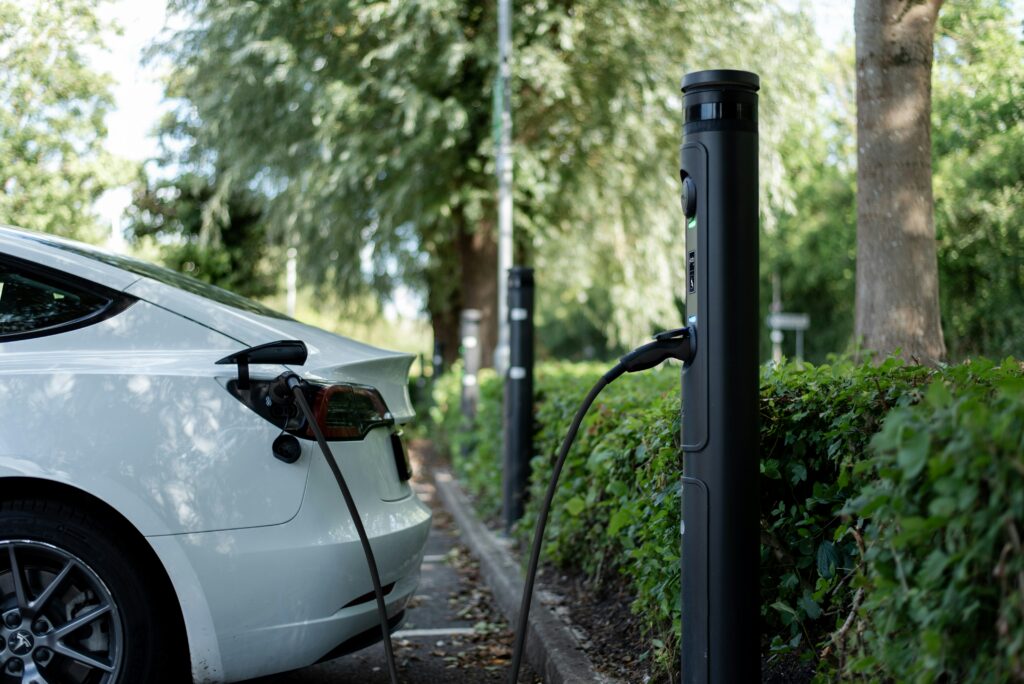
The battery is the emotional center of every used EV conversation.
That is understandable. A battery pack is expensive, hidden and hard for a normal buyer to judge from a test drive. You can look at tire tread. You can hear a bad suspension. You cannot glance under the seat and know whether a lithium-ion pack has had a gentle life.
But the worst battery stories are not the normal battery story for many modern EVs.
Autoweek, covering Recurrent data from more than 30,000 EVs, reported average range retention of about 97% after three years and 95% after five years. That is not a guarantee for every car. It is not permission to skip inspection. But it does change the tone of the conversation.
The better question is not, “Is the battery about to die?”
The better question is, “How much useful range does this specific car still have, and what warranty protects it?”
That distinction matters. A five-year-old EV with stable range, clean history and battery warranty remaining may be far less frightening than its price suggests. A newer EV with flood history, unclear service records or unresolved high-voltage issues may be cheap for excellent reasons.
Battery fear should not decide the purchase.
Battery evidence should.
Range Is Not the Number on the Window
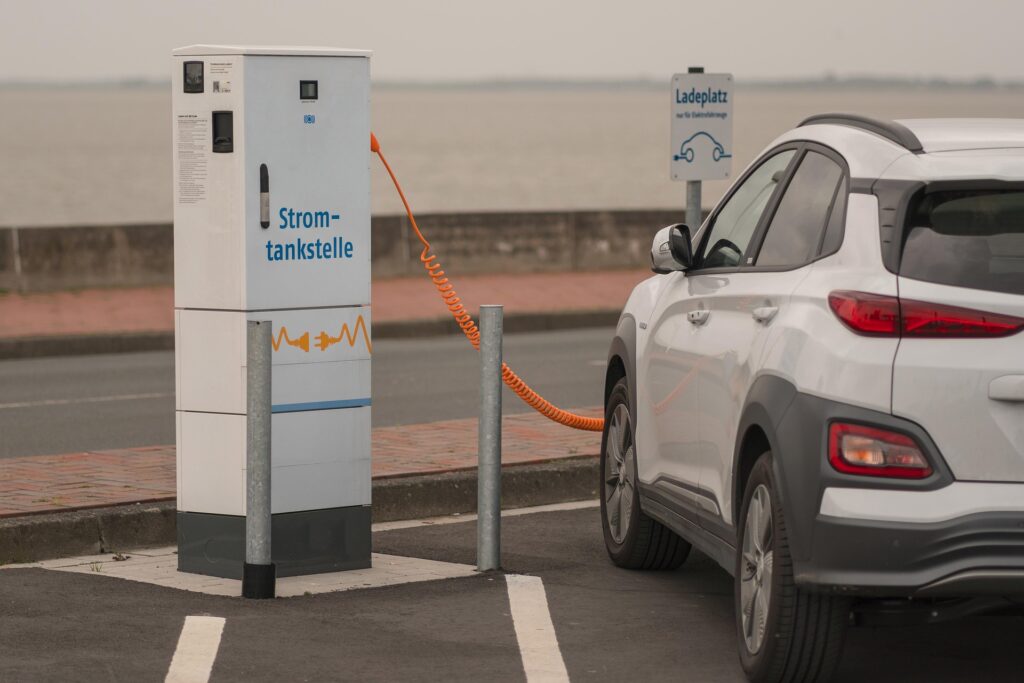
Range is where buyers often get tricked by simplicity.
An EV rated at 280 miles does not deliver 280 miles in every situation. Highway speed, cold weather, tire choice, wheel size, hills, heavy cargo and cabin heat can all reduce real-world range. Battery age may reduce it further. So can software limits, charging habits or a previous owner’s use pattern.
This is why a used EV has to be judged against a real week, not an ideal day.
If you drive 35 miles a day, can charge at home and rarely road-trip, a used EV with 210 realistic miles may feel effortless. If you drive 160 highway miles in winter, park outside and depend on public charging, the same car may turn into an errand with seats.
Range anxiety is not always about range.
Sometimes it is about mismatch.
Charging Is the Line Between Bargain and Regret
A used EV is easiest to love when charging is boring.
You plug in at home or at work. The car fills while you sleep or while you sit at a desk. You leave with enough range without thinking about it. No gas station. No oil change. No small weekly ritual of pretending the pump handle is not slightly gross.
That version of EV ownership can make a used electric car feel like a cheat code.
The other version is less charming.
If you rely entirely on public fast charging, the savings can shrink. Public charging may cost more than home electricity. Stations may be busy, broken, poorly placed or slower than advertised. A cheap used EV can stop feeling cheap if every week includes a charging detour you resent.
FuelEconomy.gov can help compare energy costs across models, but your real numbers come from your utility rate, your charging location, your climate and your driving pattern.
The car does not decide the deal alone.
The plug does.
Warranty Can Be More Important Than Mileage
Mileage still matters, but used EVs rearrange the hierarchy.
Many EV battery warranties last longer than basic vehicle warranties, often around eight years or 100,000 miles, though exact terms vary by manufacturer, model year and battery pack. Some warranties include capacity thresholds. Some transfer cleanly. Some can be affected by title history or conditions.
That is why the VIN matters.
Do not buy based on a generic warranty memory from a forum. Confirm the warranty start date, mileage limit, transfer rules, capacity-loss coverage and whether the car has a branded title. A used EV with meaningful battery warranty remaining feels very different from one that is already outside coverage.
The same car can be a smart buy at one mileage and a gamble at another.
The odometer tells you where it has been.
The warranty tells you who is still sharing the risk.
Insurance, Tires and Repairs Can Eat the Discount
The market loves talking about cheap electricity.
It talks less warmly about insurance.
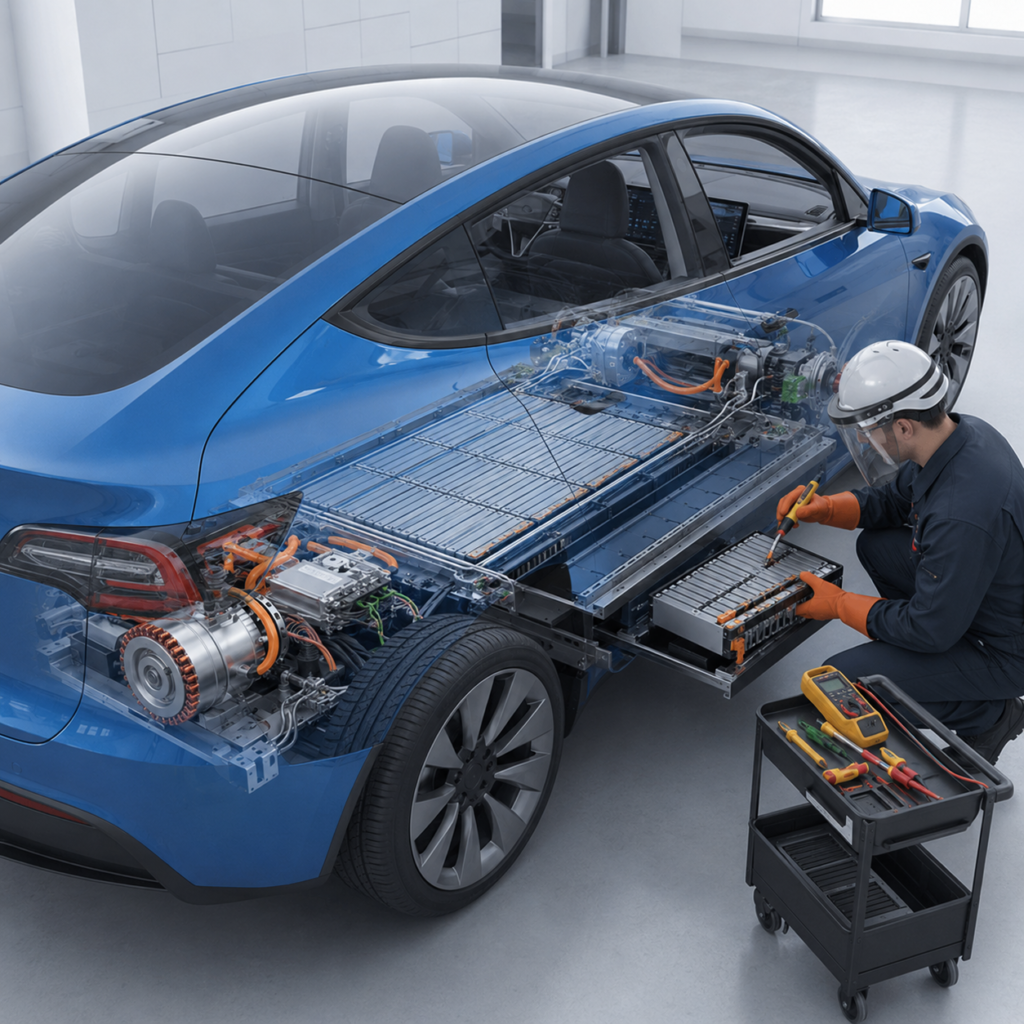
Kiplinger has reported that EV insurance can run 10% to 49% higher than comparable gas models, partly because repairs may require expensive parts, specialized labor and high-voltage inspection. Tires can also surprise buyers. EVs are heavy, deliver instant torque and often use specific low-rolling-resistance tires.
None of this means a used EV is a bad deal.
It means the deal is not finished when you see the purchase price.
Before buying, get an insurance quote for the exact model and trim. Price the tires in the correct size. Check whether local dealers or independent shops can service that model. Search the VIN for open recalls through NHTSA. Ask whether software updates are current and whether any high-voltage repairs have been performed.
This is not glamorous work.
It is also where many bad deals reveal themselves.
The Cheap Ones Are Not All Cheap for the Same Reason
A used EV can be cheap for a good reason.
Maybe it is a lease return from a common model. Maybe supply is high. Maybe the first owner absorbed the worst depreciation. Maybe the market is discounting EVs too aggressively because many buyers still do not understand battery health.
That is the opportunity.
But a used EV can also be cheap for a bad reason.
Maybe it has short real-world range. Maybe it charges slowly. Maybe it lacks active battery thermal management. Maybe it has an unresolved recall. Maybe insurance is painful. Maybe the nearest service center is a long drive away. Maybe the car’s charging connector or adapter situation does not fit your area. Maybe the title history is messy.
The price does not explain itself.
You have to make it talk.
The Used EVs That Make the Most Sense
The best used EV candidates usually share a few traits.
They have enough real-world range for the buyer’s normal routine, with margin. They have battery warranty remaining. They come from models with known service support. They have clear recall status. They charge at a speed that fits how the buyer drives. They make sense compared with a hybrid or gas car after insurance, tires and charging costs are counted.
This is why the same model can be a good buy for one person and a terrible fit for another.
A Chevrolet Bolt can be excellent local transportation if the price is right, the recall history is clean and the buyer understands charging speed. A Tesla Model 3 can be compelling because of charging access and software familiarity, but insurance and repair costs still need checking. A Hyundai Ioniq 5 or Kia EV6 may offer excellent charging performance, but price, warranty and service access decide the deal. A Nissan Leaf can be cheap for local driving, but older short-range models and battery thermal management deserve extra attention.
Model names are only the beginning.
Use case is the verdict.
What Buyers Should Actually Check
The used EV test is not complicated, but it has to be specific.
Start with range. Compare the original EPA rating with the seller’s claimed current range, then think about your real commute, winter weather and highway use.
Then check warranty. Confirm the battery warranty by VIN, not by memory.
Then check charging. Know where you will charge on ordinary days. If you need Level 2 charging at home, price the installation before buying the car.
Then check ownership costs. Get an insurance quote. Price tires. Search recalls through NHTSA. Ask about service support nearby.
Finally, compare alternatives. A used EV is not only competing against another used EV. It is competing against a hybrid that needs no plug, a fuel-efficient gas car that is easy to service and a newer EV that may have better tech.
If the used EV still wins after that, the low price may be real value.
If it only wins before the questions begin, it is just a shiny discount.
Cheap Finally Means Possible. It Does Not Mean Easy.
The used EV market has changed in a way that matters.
For years, the electric car conversation was mostly about new cars: new platforms, new batteries, new factories, new charging networks, new promises. Now the second-hand market is becoming the place where EVs meet ordinary household budgets.
That is important.
Most people do not buy new cars. They buy used ones. If EVs are going to become normal, they have to survive the used market, not just the launch event.
The sudden cheapness of used EVs is not one simple story. It is early-adopter depreciation, Tesla price cuts, lease returns, expired federal incentives, buyer hesitation and rapid technology improvement all showing up on the same windshield sticker.
For careful buyers, that creates one of the most interesting used-car opportunities right now.
For careless buyers, it creates a trap with instant torque.
The difference is not whether the car is electric.
The difference is whether the discount matches your life.
Related reading: Electric cars are not the only vehicles losing value quickly. See our broader guide to the cars that lose value the fastest in 2026.
FAQ
Why are used EVs so cheap right now?
Used EVs are cheaper because new-EV prices and discounts changed the market, many leased EVs are returning, buyers remain cautious about charging and batteries, and federal incentive rules changed after Sept. 30, 2025.
Are used EVs a good deal in 2026?
They can be. A used EV is more likely to be a good deal if you can charge at home or work, the battery health and warranty are clear, insurance is reasonable and the real-world range fits your routine.
Do used EV batteries wear out quickly?
Many modern EV batteries retain useful range for years, but battery health varies by model, climate, charging habits and history. Buyers should verify the specific car instead of relying only on averages.
Can I still get a federal used EV tax credit?
The IRS says the Previously-Owned Clean Vehicle Credit is not available for vehicles acquired after Sept. 30, 2025. Buyers should check current federal, state, local and utility incentives before assuming any rebate.
What is the first thing to check before buying a used EV?
Start with real-world range, battery warranty and charging access. Then check recalls by VIN, get an insurance quote and confirm service support near you.
Is a used EV better than a hybrid?
It depends on charging. A used EV can be better if you can charge conveniently and drive predictable mileage. A hybrid may be better if you cannot charge at home, take frequent long trips or want fewer planning demands.
Sources
- IRS – Used Clean Vehicle Credit
- FuelEconomy.gov – Compare Cars Side-by-Side
- NHTSA – Recalls Search
- Car and Driver – Why 2026 Will Be a Great Time to Buy a Used EV
- Autoweek – Your EV Battery Probably Isn’t Dying Anytime Soon
- Kiplinger – Used EV Prices Are Falling
- Business Insider – Cox Automotive EV Sales Coverage
- The Verge – Used EV Lease-Return Market Coverage
