
Uncategorized
Why Modular Outdoor Kitchens Are Suddenly Everywhere
Modular outdoor kitchens can make a backyard feel like a real outdoor room, but the best setup depends on climate, layout, safety and how you actually cook.
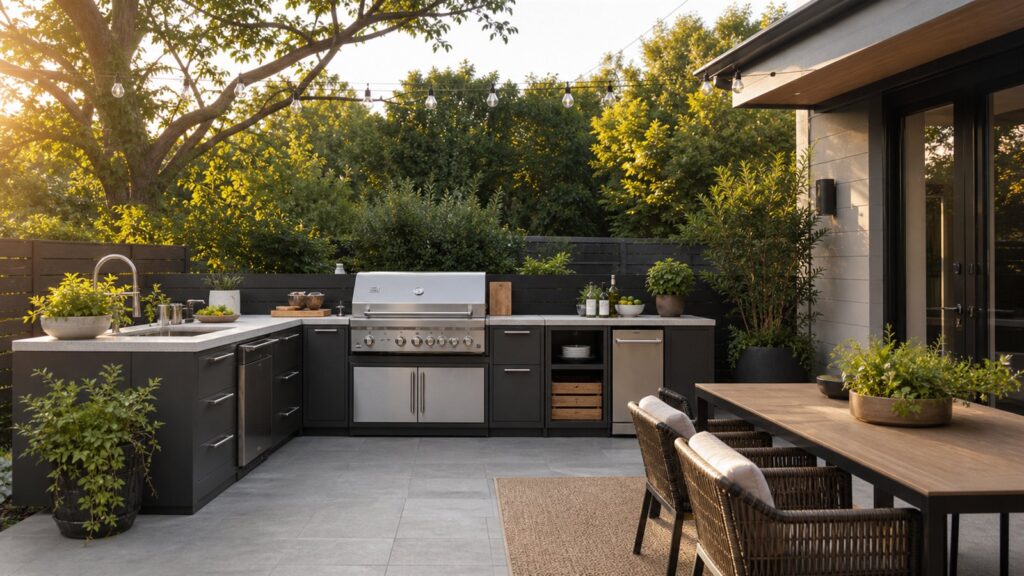
Editorial illustration created for HFD.
First came the grill.
Then came the pizza oven. Then the drinks refrigerator. Then a sink, a prep counter, a storage cabinet, a better light, a covered structure, and enough outdoor furniture to suggest the backyard had quietly applied for indoor status.
That is the real story behind modular outdoor kitchens.
They are not appearing everywhere just because homeowners suddenly became serious open-air chefs. They are appearing because the backyard is being asked to behave less like leftover space and more like a real room.
For a long time, the outdoor cooking area was simple: one grill, one wobbly side table, one person carrying raw food through the living room while everyone else pretended this was efficient. Now the expectation is different. The backyard is supposed to host dinner, conversation, drinks, kids, guests, shade, lighting, storage, and sometimes the entire social life of a summer evening.
A modular outdoor kitchen fits neatly into that shift.
It promises the feeling of a planned outdoor room without immediately committing to a permanent custom construction project. That is the appeal. Not just a better grill. A lower-commitment way to make the outside of the house work harder.
The Outdoor Kitchen Is Becoming a Room
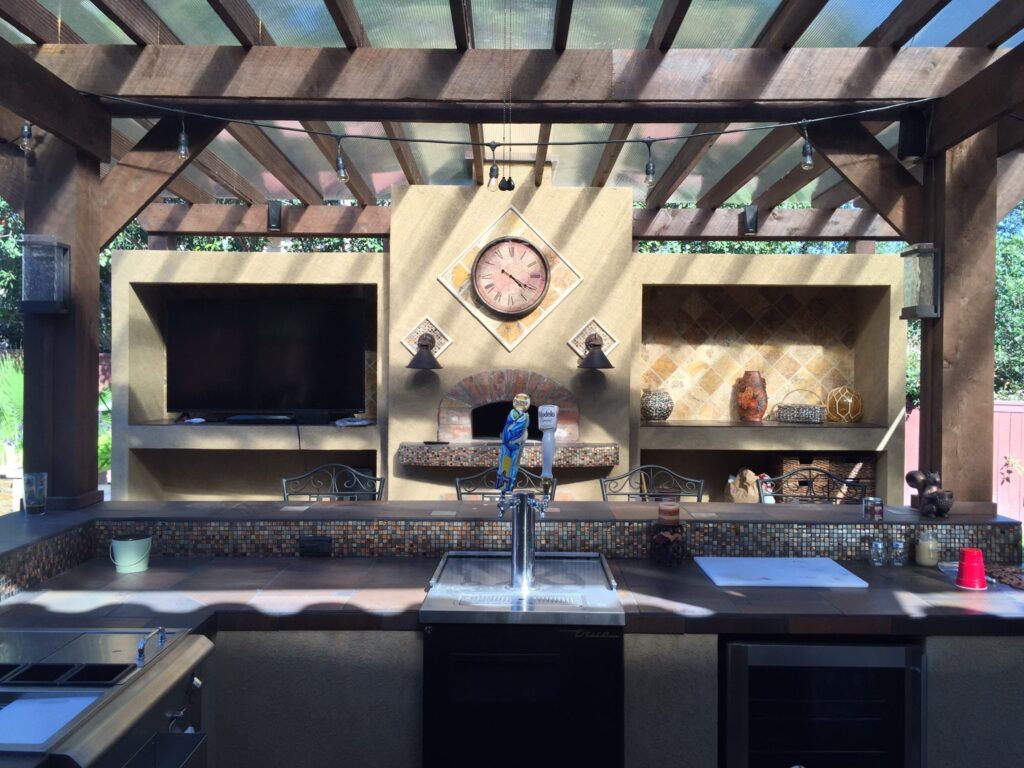
The modern backyard is no longer just the place behind the house.
For many homeowners, it is extra living space. A dining room without walls. A lounge with weather problems. A place where the host can cook without disappearing indoors for half the evening.
That change did not arrive from one direction. Housing costs pushed people to make more use of the space they already have. The pandemic changed how many households thought about entertaining at home. Design culture made outdoor living look more polished. Appliances became more specialized. Builders and designers started treating patios, covered structures, kitchens, seating, lighting, and shade as connected systems rather than separate purchases.
Industry numbers point in the same direction, though they should be treated carefully. Grand View Research estimated the global outdoor kitchen market at about $26.3 billion in 2025 and projects continued growth through 2033. That does not mean every household needs one. It does mean outdoor cooking has moved from occasional barbecue setup into a serious home-improvement category.
The more interesting change is cultural.
People are not only buying a place to cook outside. They are buying a way to make the home feel larger, more flexible, and less trapped inside its original walls.
Modular Does Not Always Mean Portable
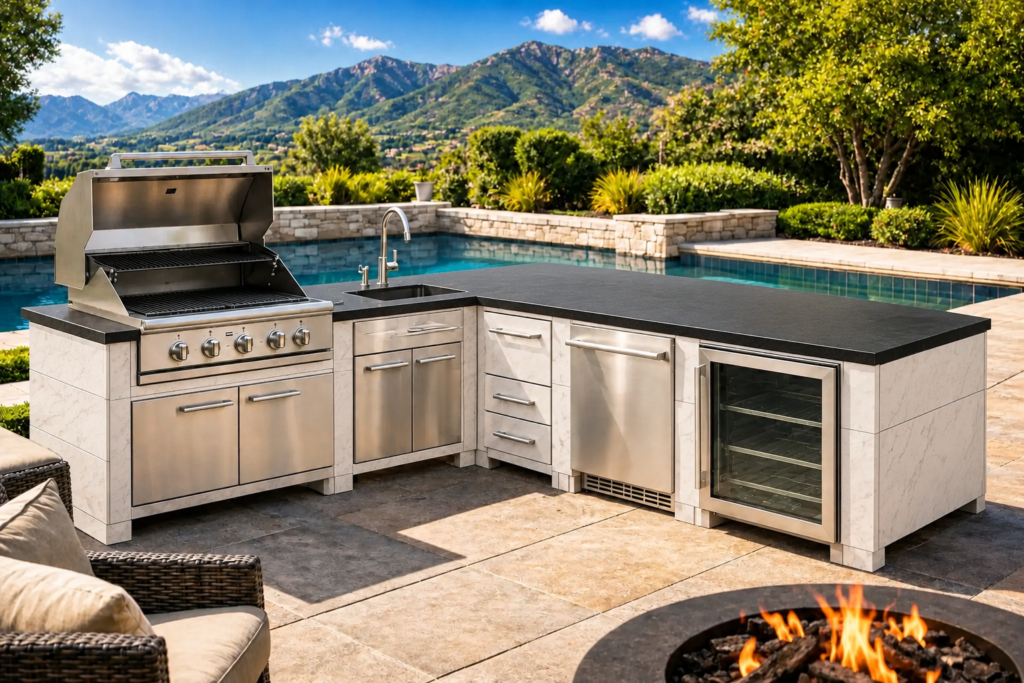
A modular outdoor kitchen is built from separate, compatible units that can be combined into a larger setup.
Those units may include a grill cabinet, sink module, refrigerator cabinet, storage section, bar island, worktop, trash pull-out, side burner, or pizza oven station. Some systems are genuinely movable. Others are heavy, installed, and connected to utilities. They are modular because they are configurable, not because one person can casually roll them across the patio after lunch.
That distinction matters.
Marketing often makes modular sound effortless. In reality, the modules may be simple to place while the utilities underneath them have a more complicated opinion.
A basic grill-and-counter setup may be fairly straightforward. Once the plan includes gas lines, electrical outlets, refrigeration, plumbing, drainage, lighting, or a roof structure, the project becomes more serious. It may still be easier than a full custom build, but it is not automatically plug-and-play.
Modular is best understood as a middle path.
It sits between a freestanding grill and a fully built-in outdoor kitchen. It can look more finished than a cart. It can require less permanent construction than masonry. And, if chosen carefully, it can grow as the household learns what it actually uses.
The Appeal Is Flexibility, Not Just Convenience
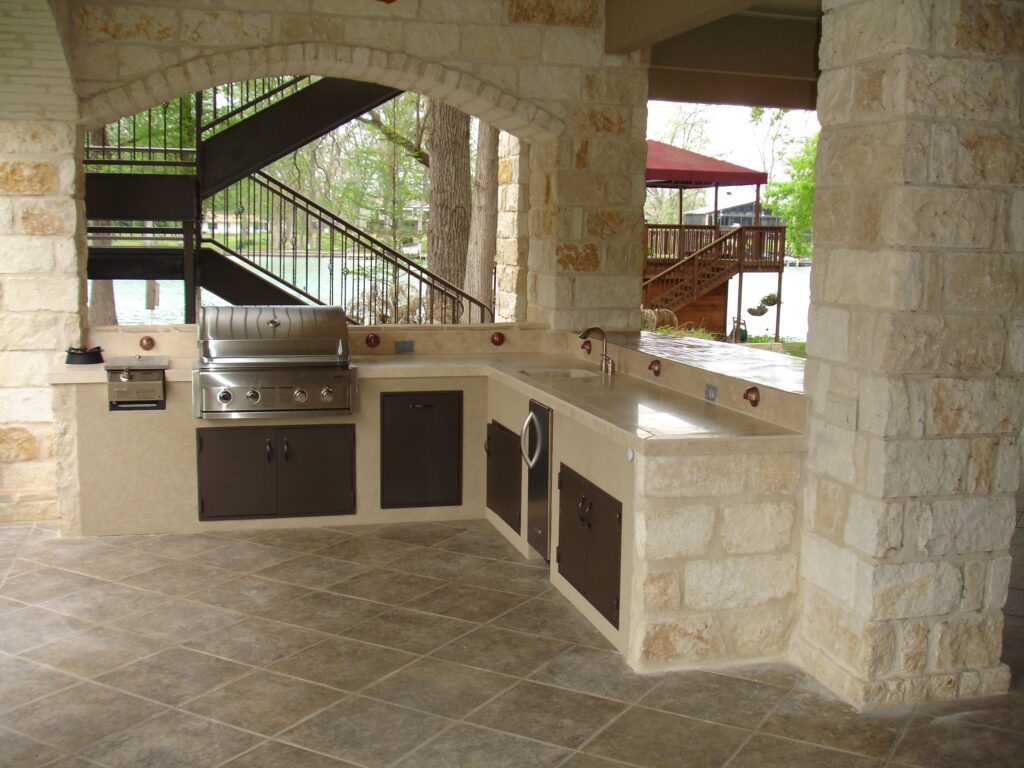
A traditional built-in outdoor kitchen asks the homeowner to make a long list of permanent decisions.
Where will the grill sit? How much counter space is enough? Is a sink worth the plumbing? Will a refrigerator be useful or just expensive? What happens if the family starts using a smoker instead of the grill? What if the patio furniture changes? What if the homeowner moves?
A modular system lowers the pressure.
Someone can begin with a grill, storage, and prep surface. Later, they may add refrigeration, a sink, a pizza oven station, or a bar module. The kitchen evolves instead of arriving fully formed.
That is why the emotional appeal is stronger than the technical one.
You do not need to know what your dream backyard will look like ten years from now. You only need to know what would make it more useful this summer.
A built-in kitchen is more like commissioning a tailored suit. A modular one is closer to building a wardrobe from coordinated pieces. It can still look intentional, but you can add, remove, or rearrange as your needs become clearer.
For homeowners tired of giant renovation decisions, that flexibility feels almost luxurious.
Outdoor Cooking Got More Specialized
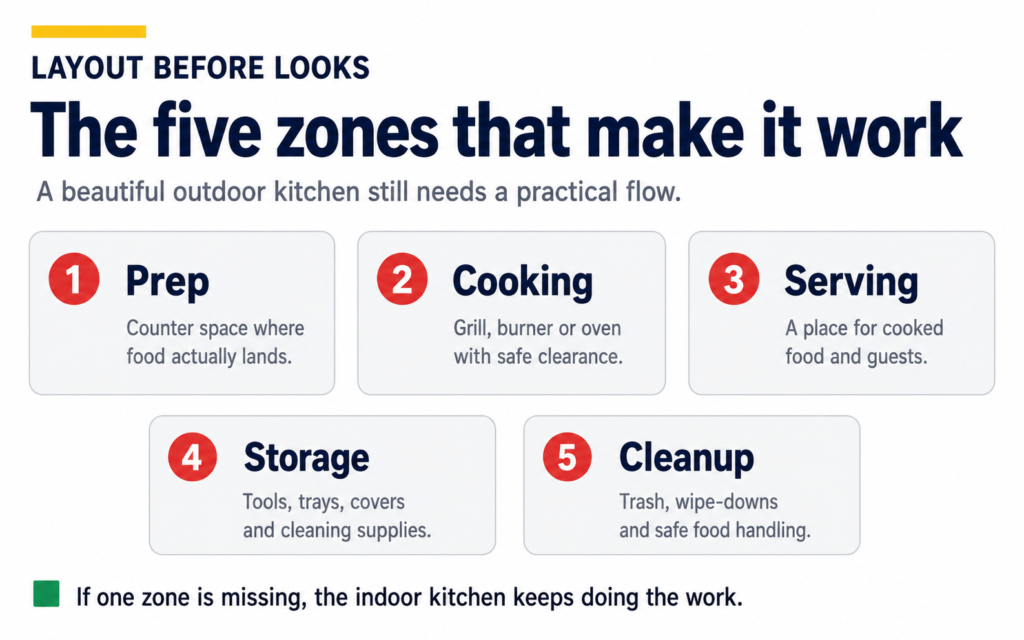
The basic barbecue is no longer the only event.
Outdoor cooking now includes gas grills, charcoal grills, smokers, pizza ovens, flat-top griddles, side burners, beverage refrigerators, ice makers, prep zones, and serving counters. The more specialized the cooking gets, the less one giant grill island makes sense for every household.
Modularity helps because each section can do a job.
One module cooks. One stores. One chills drinks. One gives the cutting board a place to exist that is not the top of a cooler. Civilization advances in small steps.
This is also where restraint matters.
The fact that a patio can support a refrigerator, sink, bar, pizza oven, storage wall, and lighting package does not mean it should. The best outdoor kitchen starts with habits, not catalog pages.
Do you grill once a week? Host long dinners? Cook full meals outdoors? Need a drink station because guests gather outside? Prep indoors and only cook outside? Serve two people or twelve?
Those answers decide the modules.
If the indoor kitchen is ten steps away, a sink may be a luxury rather than a necessity. If you host often, drink storage and trash access may matter more than a second cooking surface. If you mostly grill quick meals, landing space beside the grill may be more useful than a dramatic appliance you use three times a year.
The goal is not to build a miniature restaurant.
The goal is to remove the friction that keeps sending everyone back inside.
The Photos Usually Hide the Weather
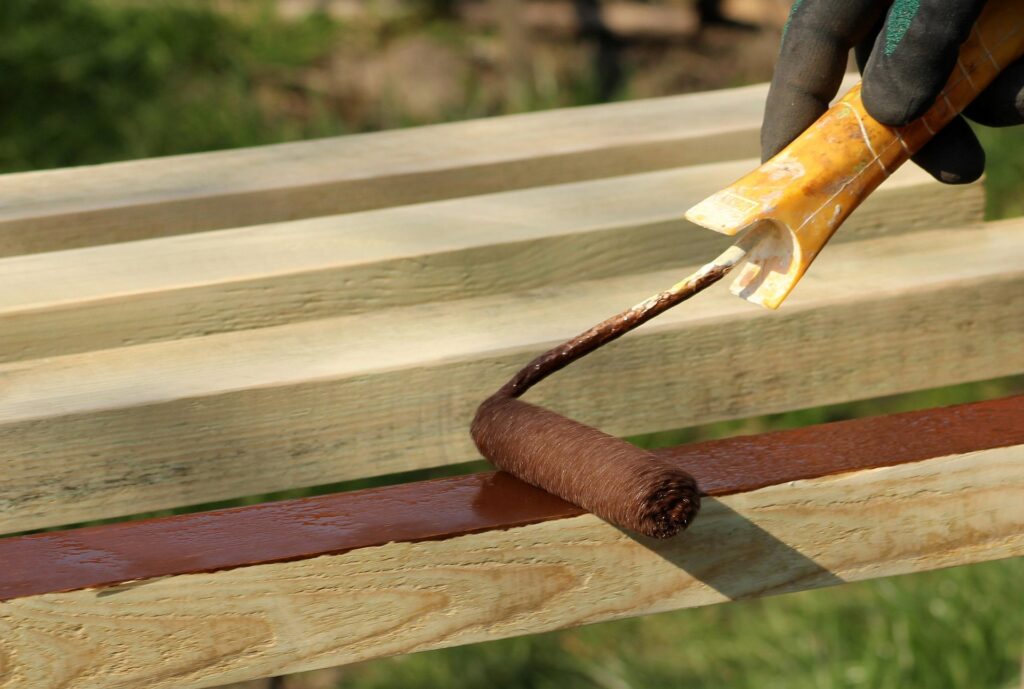
Outdoor kitchens live a harder life than indoor kitchens.
They face sun, rain, humidity, freezing temperatures, salt air, pollen, grease, insects, wind, dust, and temperature swings. Indoor cabinetry does not become outdoor cabinetry because someone put it near a nice plant.
Materials have to match the exposure.
Stainless steel is common because it is durable and visually compatible with appliances, but not all stainless steel performs the same way in moisture or salt air. Powder-coated metal, masonry, concrete, porcelain, weather-resistant panels, and specialized outdoor cabinetry can all make sense depending on the climate and maintenance routine.
The better question is not “What looks best?”
It is: best for which weather, which exposure, and which owner?
In hot, sunny areas, shade and surface temperature matter. In rainy or humid places, drainage and corrosion resistance move up the list. In cold climates, plumbing and winterization can change the whole project. Near the coast, salt air can make hardware, hinges, and finishes age faster than expected.
This is where modular systems can help or hurt.
They can make replacement and phased upgrades easier. But if a system uses proprietary parts, unusual dimensions, or finishes that do not hold up locally, the flexibility may be less useful than promised.
The backyard is charming. The weather is not sentimental.
The Trade-Offs Are Where the Decision Gets Real
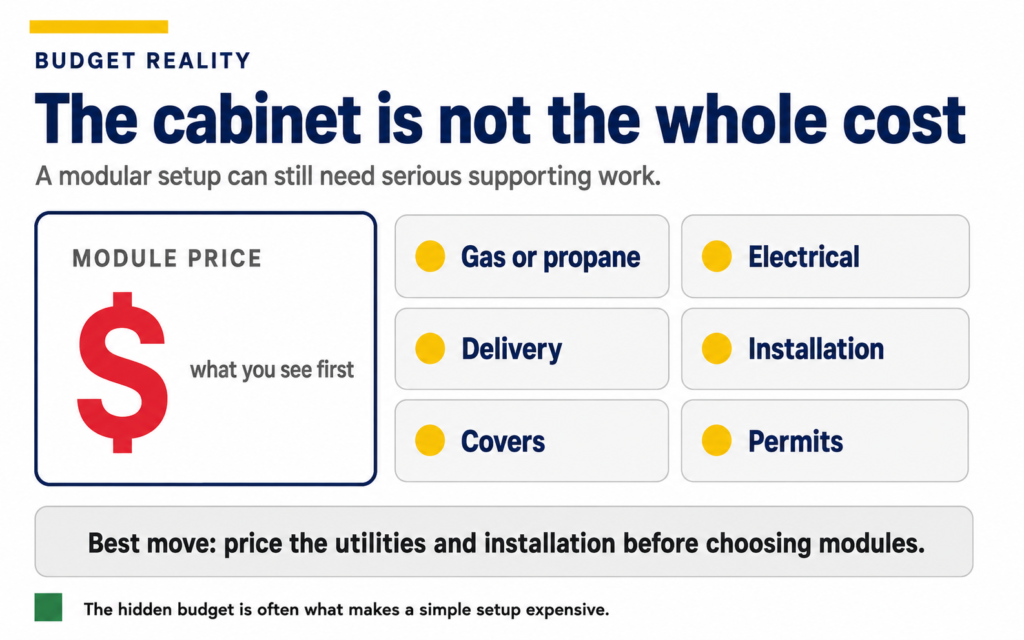
Modular outdoor kitchens solve one problem by creating others.
They can reduce construction commitment, but they may not offer perfect custom fit. They can look polished, but visible seams between modules may bother some homeowners. They can expand over time, but matching future parts may depend on whether the manufacturer keeps making the same line.
They can also become expensive.
A modular setup may sound cheaper than a custom build, and sometimes it is. But premium modules, outdoor-rated appliances, countertops, delivery, utility work, leveling, covers, lighting, shade, and installation can quickly push the project toward custom-kitchen territory.
The word modular should not make anyone stop doing math.
There are also layout issues. Outdoor floors may slope for drainage. Cabinet doors need room to open. Smoke needs somewhere to go. Guests need to move without crossing the cooking zone. Raw food, cooked food, trash, tools, and serving dishes all need places to land.
A kitchen can photograph beautifully and still cook badly.
That is the danger with outdoor living trends. The image arrives before the routine. The routine is what decides whether the project becomes part of daily life or a very expensive place to store tongs.
Safety Belongs in the Design, Not at the End
An outdoor kitchen brings together heat, fuel, food, people, and weather. That is exactly why safety cannot be an afterthought.
The National Fire Protection Association has emphasized basic grilling precautions such as keeping grills away from the home, deck railings, eaves, and overhanging branches, cleaning grease buildup, checking gas tanks, and never leaving a grill unattended. USDA food-safety guidance adds the less glamorous but equally important part: separate raw and cooked foods, use a food thermometer, and keep perishable foods out of unsafe temperature ranges.
In practical terms, the layout should make safe behavior easier.
There should be enough counter space so raw chicken does not share a crowded tray with cooked food. Lighting should be good enough to see what is happening. Heat should not sit too close to siding, railings, ceilings, or dry landscaping. Outdoor appliances should be rated for outdoor use. Gas, electrical, and plumbing work should follow manufacturer instructions and local rules.
The modules may look like furniture.
They are still working around flame, fuel, wiring, water, and food.
When Modular Makes More Sense Than Built-In
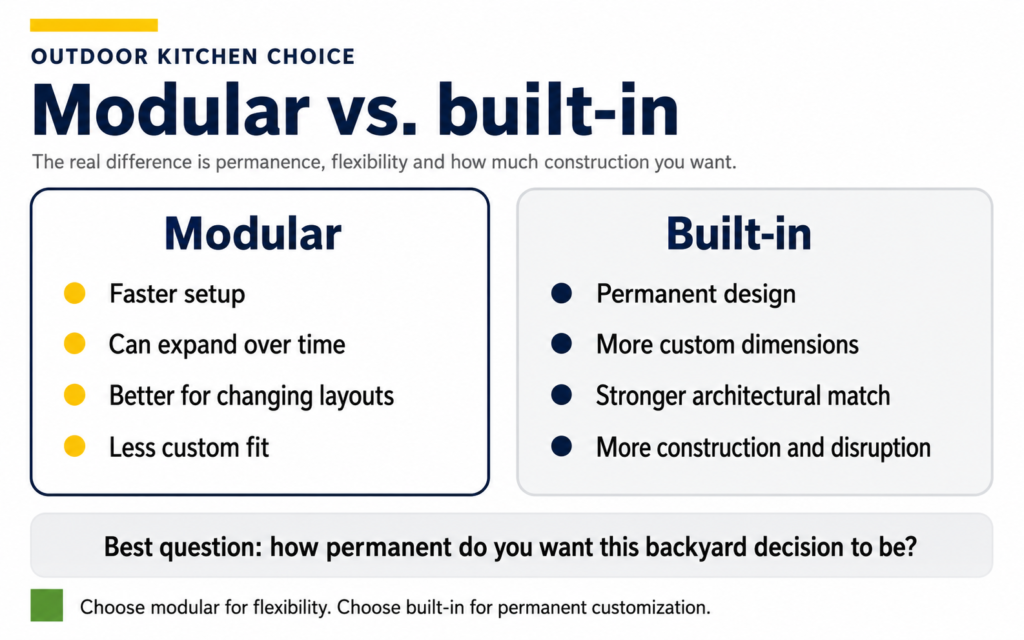
A modular outdoor kitchen is strongest when the homeowner wants usefulness without locking the whole yard into one permanent decision.
It may be the better fit when:
- the household wants to start small and expand later;
- the patio layout may change;
- the space is defined but not perfectly standard;
- the owner wants less masonry or construction;
- outdoor cooking habits are still evolving;
- flexibility matters more than seamless customization;
- the budget benefits from phasing the project over time.
A built-in kitchen may make more sense when:
- the layout is unlikely to change;
- utilities and structural work are already part of a larger renovation;
- the architecture needs a fully integrated look;
- the climate or exposure calls for heavy permanent construction;
- the property is being designed around long-term outdoor entertaining;
- exact dimensions and finishes matter more than flexibility.
Neither choice is automatically smarter.
The smarter choice is the one that fits the actual home, not the one that wins the brochure.
The Questions Worth Asking Before You Buy
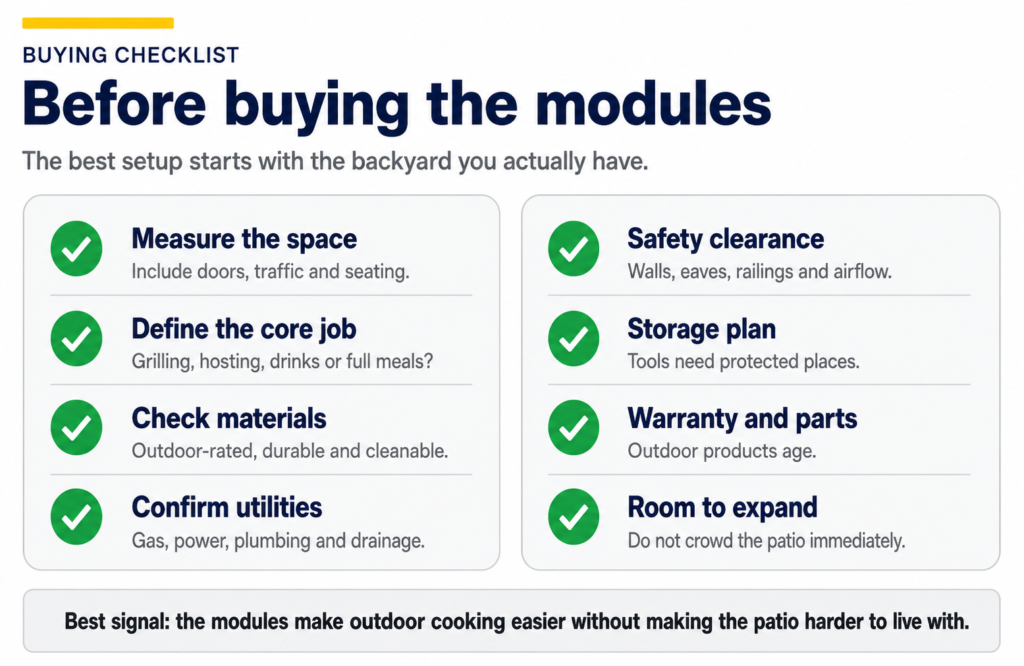
Before choosing modules, the homeowner should slow down and ask better questions.
What problem am I actually trying to solve?
If the answer is “I need a place to prep food beside the grill,” the solution may be simple. If the answer is “I want guests to gather outside while I cook full meals,” the project may need seating, shade, lighting, storage, trash, and a more deliberate layout.
How often will I use this?
Lifestyle value matters, but it should be honest. A feature used every weekend is different from one used twice a year because it looked wonderful online.
Is the decision reversible?
One advantage of modular design is the ability to change course. But that depends on weight, utility connections, manufacturer parts, and how the modules are installed.
What maintenance will it require?
Outdoor kitchens need cleaning, covers, inspections, rust prevention, grease management, and sometimes seasonal shutdowns. If the maintenance routine feels unrealistic, the design may be too ambitious.
Does it suit my climate?
The same setup that works under a covered patio in Arizona may not behave the same way in a rainy coastal yard or a freeze-thaw climate.
Am I paying for usefulness or for the image of usefulness?
This may be the most uncomfortable question, which usually means it is the useful one.
The Backyard Is Moving Into the House’s Job Description
Modular outdoor kitchens look like a design trend. Underneath, they reflect something more durable.
People want homes that can stretch. They want spaces that adapt when families change, work changes, entertaining changes, and budgets make moving harder. They want the outside of the home to carry more of the inside’s responsibilities: cooking, gathering, storing, hosting, relaxing, and making ordinary days feel less boxed in.
That does not mean every backyard needs a full outdoor kitchen.
Sometimes the smartest outdoor setup is one excellent grill, a durable prep cart, good lighting, and somewhere comfortable to sit. Sometimes modularity is exactly the right middle ground. Sometimes a built-in kitchen makes sense because the space, climate, and long-term plan justify it.
The point is not to make the backyard look more expensive.
The point is to make it work more like part of the home.
That is why modular outdoor kitchens are suddenly everywhere. They are not just selling cabinets and grills. They are selling a new boundary line: one where the house does not quite end at the back door.
FAQ
Are modular outdoor kitchens cheaper than built-in outdoor kitchens?
Often, but not always. Modular systems can reduce custom construction costs, but premium modules, outdoor-rated appliances, delivery, utilities, leveling, lighting, shade, and installation can still add up. Compare the full project, not just the cabinet price.
Can modular outdoor kitchens stay outside year-round?
Some can, depending on materials, climate, exposure, and maintenance. Check whether each component is outdoor-rated and whether it needs covers, drainage, rust prevention, winterization, or seasonal storage.
Do modular outdoor kitchens need plumbing or electricity?
Not always. A basic grill and counter setup may not. Refrigerators, sinks, lighting, outlets, ice makers, and some appliances may require outdoor-rated electrical, water, drainage, permits, or professional installation.
Is stainless steel always the best outdoor kitchen material?
No. Stainless steel is common, but grade, climate, salt exposure, maintenance, and hardware quality matter. Powder-coated metal, masonry, concrete, porcelain, and specialized weather-resistant panels may also make sense depending on the space.
Will an outdoor kitchen add value to a house?
It may improve appeal for some buyers, especially in climates where outdoor living is practical for much of the year. But there is no universal return. Value depends on quality, climate, neighborhood, design, maintenance, and whether future buyers actually want the feature.
Internal Links
- Related HFD article: How to Spot a Real Deal Before You Click Buy
- Related category: Home
External Sources
- Grand View Research – Outdoor Kitchen Market Report
- Grand View Research – Outdoor Kitchen Market Press Release
- NAHB – Millennial Buyers Prefer Better, Not Bigger Homes
- NAHB – Outdoor Trend: Are Patios on the Decline?
- NKBA – Luxury Outdoor Kitchen Research Report
- NKBA – Outdoor Living Trends
- NFPA / ANSI – Grilling Safety Tips
- USDA FSIS – Grilling Food Safely
