
Science
Did NASA Find Signs of Ancient Life on Mars? The Sample Tubes Collected by Perseverance and What the Evidence Really Says
The Mars Rock That Keeps the Life Question Open
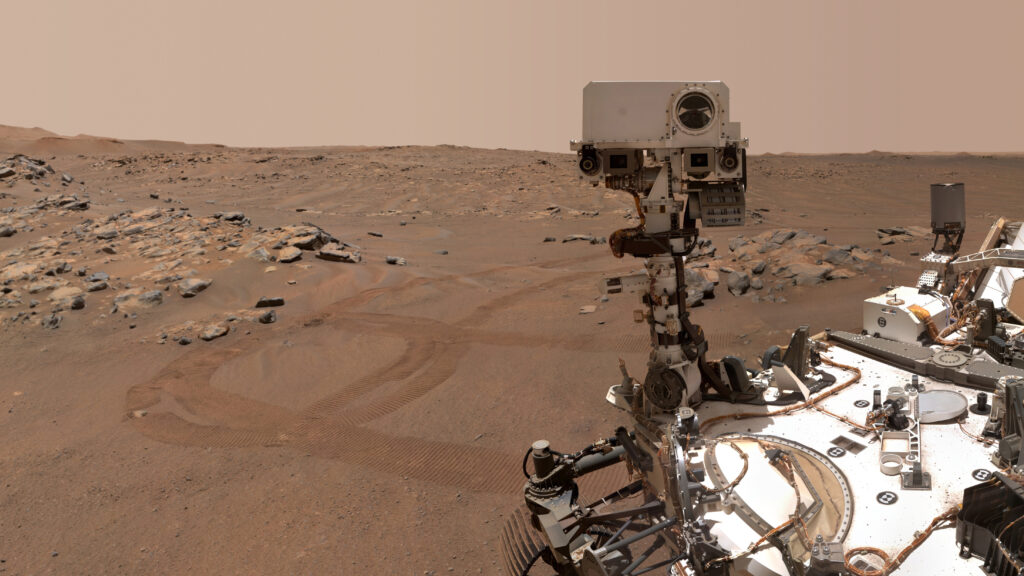
NASA’s Perseverance rover explores Jezero Crater, where it has been collecting rock and regolith samples for possible return to Earth. Credit: NASA/JPL-Caltech/MSSS.
The most interesting rock on Mars is not sitting in a museum.
It is sealed inside a titanium tube, on a cold desert world, waiting.
The rock came from a place NASA calls Cheyava Falls, a reddish, arrowhead-shaped outcrop in Jezero Crater. Perseverance drilled into it in July 2024, pulled out a core, sealed that core away, and gave the sample its own name: Sapphire Canyon.
For a while, it was one more piece in the rover’s growing collection. Then the data around it became harder to shrug off.
In September 2025, NASA announced that Sapphire Canyon contains potential biosignatures. That phrase is small, careful and easy to flatten into a headline it does not actually support. It does not mean NASA found Martian life. It does not mean there is a fossil in the tube. It does not mean a microbe is patiently waiting for its close-up.
It means the rock carries chemical and mineral clues that could fit with ancient microbial activity, while still allowing non-biological explanations.
That is the real story: not a discovery that ends the life-on-Mars question, but a discovery that makes the question harder to dismiss.
A Rock Small Enough to Seal and Big Enough to Trouble the Question
The search for ancient life on Mars has always had a strange scale problem.
The question is enormous. Are we alone? Did life begin twice in one solar system? Is biology a rare accident, or something planets do when the chemistry and timing are right?
The evidence, if it exists, may be tiny.
Not cities. Not bones. Not anything that looks like science fiction. The best clue may be a pattern in a rock, a mineral boundary, a trace of organic carbon, a chemical arrangement left behind after water, sediment and energy had time to interact.
That is why Sapphire Canyon matters.
NASA is not saying it found life. The agency is saying Perseverance found a sample worth treating with unusual seriousness. A potential biosignature is exactly that: a sign that might have a biological origin, but cannot be trusted until other explanations have been tested hard.
There is a lot of restraint in that wording.
There is also a lot of excitement.
Jezero Was Chosen Because Water Once Did the Filing
Perseverance did not land in Jezero Crater because it was convenient. Nothing about landing a rover on Mars is convenient. Even the “easy” parts require a spacecraft to hit another planet’s atmosphere at high speed and survive a landing sequence that reads like an engineering dare.
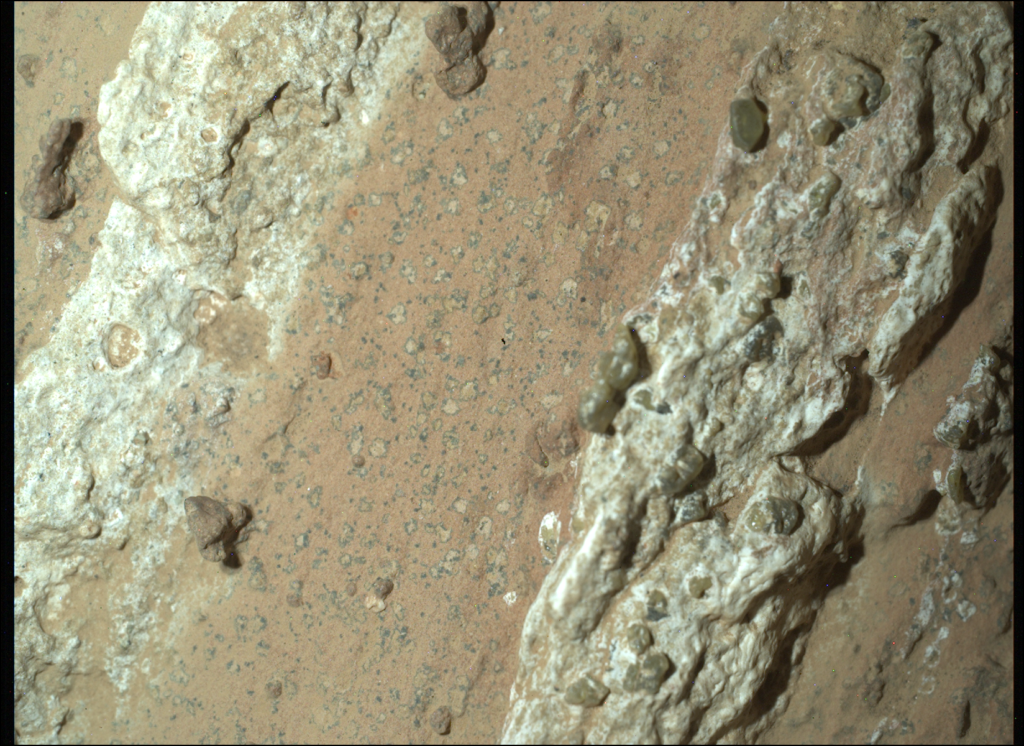
Jezero was chosen because, long ago, it appears to have held a lake, a river system and a delta.
On Earth, those are places where the past can be stored. Rivers carry minerals and organic material. Lakes let fine sediment settle. Deltas stack layers over time. If microbial life once lived in or near that water, the record might not survive as a creature. It might survive as chemistry.
That is the job Perseverance was built for.
The rover drives across Mars with cameras, spectrometers, a drill and a caching system that turns pieces of the planet into sealed witnesses. It studies rocks where they sit, then saves selected samples for the possibility that a future mission will bring them home.
A rover can look closely.
An Earth laboratory can look again and again, with instruments too large and too delicate to send across interplanetary space.
Perseverance is not just exploring Mars. It is collecting the argument.
The Tube Is Not the Discovery. It Is the Promise
This is where the sample count gets slippery.
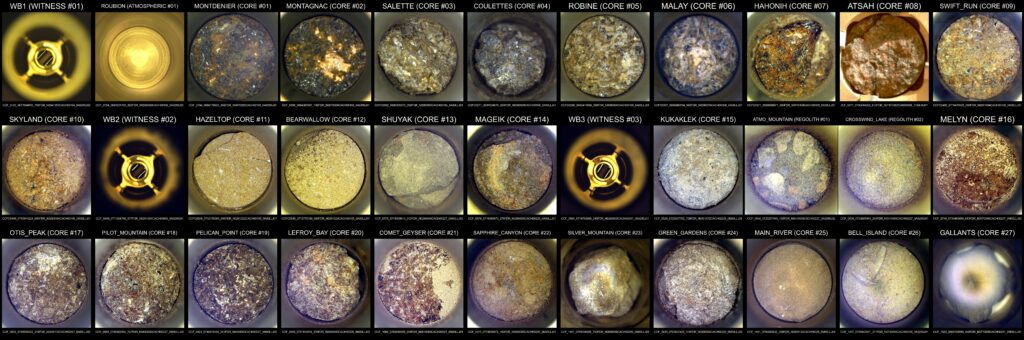
You may see references to 33 sample tubes. You may also see NASA say that Sapphire Canyon was one of 27 rock cores Perseverance had collected since landing. Both can appear in discussions of the mission, depending on what is being counted.
Mars samples are not all the same category. There are rock cores, regolith samples, an atmospheric sample and witness tubes used to track possible contamination. Some are sealed. Some catalog entries may change status as the mission continues. A single clean number sounds better in a headline than it behaves in the real mission.
So the useful question is not, “What is the magic number?”
The useful question is, “What kind of library is Perseverance building?”
One tube can hold a rock from an ancient river valley. Another can hold crater-floor material. Another can hold regolith. Together, they create context. They let scientists compare one environment with another instead of asking one famous rock to explain an entire planet by itself.
Sapphire Canyon is the sample getting attention.
The surrounding collection is what may let scientists understand it.
Cheyava Falls Looked Ordinary Until It Did Not
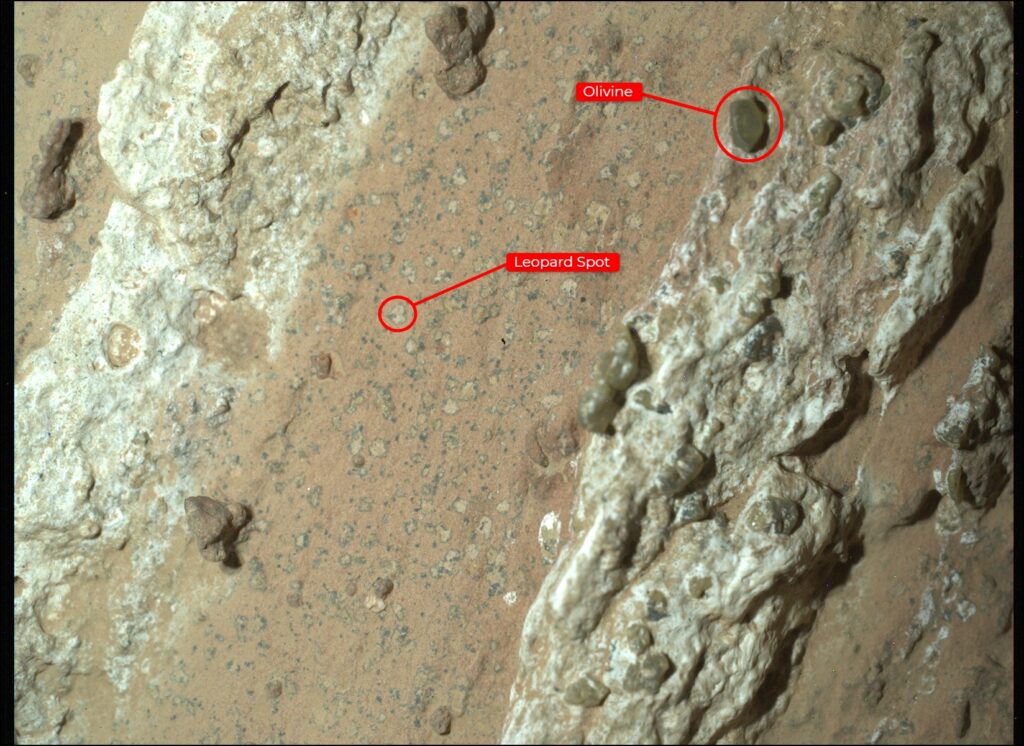
Cheyava Falls sits in the Bright Angel formation, along Neretva Vallis, an ancient river valley that once carried water into Jezero Crater. NASA describes the rock as arrowhead-shaped, about 3.2 feet by 2 feet, or roughly 1 meter by 0.6 meters.
That is not large.
It is small enough that a person could stand beside it and probably not feel history changing. Mars is full of rocks. A rover’s camera can make almost any outcrop look important if you stare long enough.
But Perseverance did more than stare.
Its instruments examined the rock’s chemistry and textures. The rover found sedimentary material rich in organic carbon, sulfur, oxidized iron and phosphorus. It also spotted small features the science team nicknamed “leopard spots.”
The name is almost too charming for the stakes.
The chemistry is the serious part.
In higher-resolution observations, those spots showed signatures of two iron-rich minerals: vivianite and greigite. On Earth, vivianite is often found in sediments, peat bogs and places associated with decaying organic matter. Greigite can be produced by certain microbial life.
That does not mean Martian microbes made the spots.
It means the rock started behaving like the kind of witness scientists do not want to ignore.
The Suspicious Part Is the Combination
Organic carbon by itself would not prove life.
Mars can have organic chemistry without biology. Organic molecules can form through non-living processes. They can arrive on meteorites. They can be altered, buried, preserved or destroyed by a planet that has spent billions of years being cold, dry and chemically complicated.
Minerals alone would not prove life either.
Neither would texture. Neither would a watery setting. Each clue can be explained in more than one way.
The force of Cheyava Falls is the stack: organic carbon, sulfur, phosphorus, iron minerals, spotted reaction fronts, sedimentary rock and an ancient river-lake environment. None of those pieces is a verdict. Together, they create a pattern that sits uncomfortably close to biology.
Uncomfortably close is not the same as confirmed.
It is the place where good science becomes both thrilling and annoyingly patient.
NASA notes that the minerals seen in the spots can also form abiotically, without life. High temperatures, acidic conditions or reactions involving organic compounds might produce similar features. The complication is that the Bright Angel rocks do not appear to show evidence of high temperatures or acidic conditions.
That weakens some easy non-biological explanations.
It does not eliminate all of them.
So the sample remains suspended in a very specific kind of uncertainty: not vague, not empty, not settled.
Worth testing.
The Word Potential Is Doing Real Work
The most important word in NASA’s announcement is not “life.”
It is “potential.”
A biosignature is evidence that may point toward life. A potential biosignature is one step more cautious: something that might have a biological origin, but still needs more data before scientists can decide.
Think of it less like finding a signed confession and more like finding a footprint-shaped mark in ancient mud.
It might be a footprint. It might be a crack. It might be erosion. The shape matters, but the shape alone cannot testify.
Mars makes every part of that judgment harder. The rock is not on a lab table in Houston or Pasadena. It is on another planet, being examined by a rover that has to ration power, survive dust, send data across millions of miles and do chemistry through instruments bolted to a machine in a crater.
Perseverance is astonishing.
It is still not an Earth laboratory.
That is why the careful language is not a buzzkill. It is the only way to keep the discovery honest long enough for it to become more important.
The Evidence May Need a Round Trip
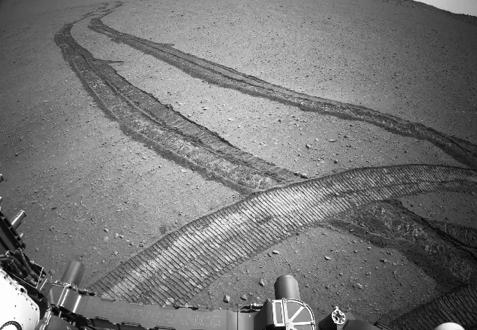
Sapphire Canyon is already sealed.
That fact gives the story its tension.
The sample exists. It has been collected. It is part of the very collection Perseverance was sent to build. Somewhere on Mars, the evidence is preserved better than a loose rock exposed to dust, radiation and time.
But preservation is not the same as proof.
To move from “this could be biological” to “this probably was biological,” scientists would want the kind of tests a rover cannot perform fully on Mars. They would want high-resolution microscopy. Isotope measurements. Molecular analysis. Independent teams testing the same material. Contamination checks. Lab experiments that try to reproduce the same chemistry without life.
In other words, they would want the sample on Earth.
That is the maddening beauty of the Perseverance mission. It may have already done the part only a rover can do: find the right rock, drill the right core, seal it in the right tube.
Now the question becomes whether humans can complete the chain.
Bringing Mars Home Is the Hard Part
Mars Sample Return sounds almost simple if you say it quickly.
Go to Mars. Pick up the tubes. Launch them from the surface. Catch them in space. Bring them safely to Earth.
That sentence is doing heroic amounts of unpaid labor.
The mission concept has faced cost growth, schedule pressure and redesigns. NASA and its partners have explored ways to make the plan cheaper and faster, because retrieving samples from another planet is not one mission so much as a stack of missions balanced on top of one another.
For Cheyava Falls, that uncertainty matters.
If Sapphire Canyon comes back, scientists can attack the question with tools Perseverance could never carry. If it stays on Mars, the sample may remain what it is now: one of the most compelling clues ever found on the Red Planet, still just out of reach of the tests that could strengthen or weaken the case.
That is not a failure of the rover.
It is the reason the rover sealed the tube.
Complex Carbon Makes the Scene Richer, Not Solved
Recent reporting on Perseverance data has also pointed to complex organic carbon in Martian mudstones from the Bright Angel area.
That detail belongs in the story, but it needs the same restraint.
Organic carbon is not life. It is chemistry that life uses, chemistry life can leave behind, and chemistry non-living processes can also produce. Treating organics as proof would be like finding flour in a kitchen and declaring a cake.
Still, the kitchen matters.
Complex carbon in an ancient river-lake setting, near mineral patterns tied to electron-transfer reactions, gives scientists a richer scene to investigate. It suggests that the environment was chemically active in ways that matter for habitability.
That is not the end of the case.
It is a better crime scene, if we can borrow the metaphor gently.
What Would Move This From Clue to Claim

No serious life-on-Mars claim should rest on one dramatic-looking feature.
The stronger case would come from convergence: different kinds of evidence, from the same sample and nearby samples, pointing in the same direction after non-biological explanations have been tested and weakened.
Scientists would want to know whether the organics are truly Martian. They would want to know whether the mineral patterns can form without life under realistic Martian conditions. They would examine isotopes, textures and molecular structures. They would compare Sapphire Canyon with other Jezero samples. They would let independent teams try to break the claim.
That last part matters.
Science does not become stronger because everyone agrees quickly. It becomes stronger because the idea survives contact with people trying to prove it wrong.
NASA and astrobiologists use frameworks such as the Confidence of Life Detection scale, or CoLD, to think through that process. The point is not to drain wonder from the discovery. The point is to make sure wonder does not outrun evidence.
Mars has had enough false starts.
This one deserves patience.
Even a False Signal Would Still Matter
The less romantic outcome would still teach scientists something valuable.
If Cheyava Falls turns out to be non-biological, Mars will have shown that it can create a convincing imitation of some of life’s chemical fingerprints. That would be frustrating for headline writers and useful for everyone else.
Future missions will search for life on icy moons, ancient Martian terrains and planets beyond the solar system. If non-living chemistry can make patterns that resemble biosignatures, scientists need to learn that now.
A false alarm is not always wasted.
Sometimes it teaches you what the real alarm should sound like.
If the Signal Is Biological, the Solar System Gets Larger
If future analysis eventually shows that Cheyava Falls really does preserve evidence of ancient microbial life, the discovery would reach far beyond Mars.
It would mean life emerged on at least two worlds in one solar system, unless Earth and Mars exchanged life through meteorites long ago. Either answer would be enormous.
If life began independently on both planets, then biology may be a common result when water, chemistry and time line up.
If life moved between worlds, then planets may not be sealed islands. They may be connected by impacts, rocks and deep time in ways that make the word “world” feel less isolated than it once did.
Either way, the question changes.
Not “Can life happen here?”
“How often does it happen when the universe gets the ingredients close enough?”
That is why the sample matters even before it proves anything.
It points to the size of the answer.
The Honest Reading
So, did NASA find signs of ancient life on Mars?
The honest answer is this: NASA found a potential biosignature, not confirmed life.
Perseverance collected a sample called Sapphire Canyon from a rock called Cheyava Falls in Jezero Crater. The rock contains organic carbon, mineral patterns and textures that could be consistent with ancient microbial activity. The setting was once shaped by water. The chemistry is interesting. Some easy non-biological explanations look less obvious than scientists might have expected.
But non-biological explanations remain possible.
That is the line the article has to hold.
The finding is not empty.
The finding is not proof.
It is one of the strongest reasons yet to keep the question open.
Mars Has Given Us a Place to Look
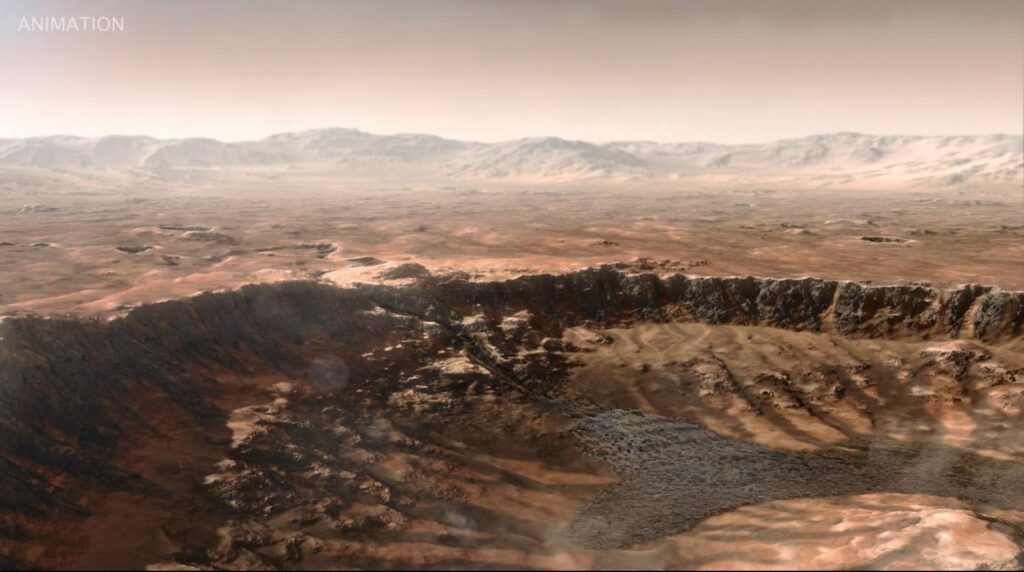
The most powerful thing about Sapphire Canyon may be that it gives the mystery a location.
Not Mars in general. Not the vague romance of a red planet in the night sky. A specific rock, in a specific formation, along an ancient river valley, sealed in a specific tube by a machine humans landed in a crater more than 140 million miles away, depending on where Earth and Mars are in their orbits.
That is already astonishing.
Perseverance has not ended the search for life on Mars. It has made the search sharper. It has taken the biggest question humans ask about other worlds and placed it inside a tube small enough to hold in a hand.
If Sapphire Canyon ever reaches Earth, scientists may find that Cheyava Falls was a beautiful false signal.
Or they may find that Mars once carried biology in its wet, ancient past.
For now, the planet has not given up its secret.
It has done something almost as important.
It has shown us where the next, harder question begins.
More science worth reading
If you liked the careful science behind Perseverance’s Mars samples, our Ring of Fire explainer looks at how earthquake data can be misunderstood when maps make distant events look connected.Read: Recent Ring of Fire Earthquakes: What They Really Mean
FAQ
Did NASA find life on Mars?
No. NASA has not confirmed life on Mars. Perseverance found a potential biosignature, which means a clue that might have a biological origin but still needs more evidence.
What is Cheyava Falls?
Cheyava Falls is a rock in Mars’ Jezero Crater investigated by NASA’s Perseverance rover. It sits in the Bright Angel formation near Neretva Vallis, an ancient river valley.
What is Sapphire Canyon?
Sapphire Canyon is the sample core drilled from Cheyava Falls. NASA identifies it as a sedimentary rock sample sealed on July 21, 2024.
What is a potential biosignature?
A potential biosignature is a substance, structure or pattern that might have been produced by life but still requires further study before scientists can decide.
Why do the sample tubes matter?
The sample tubes preserve Martian material for possible return to Earth. Earth laboratories could test the samples with instruments far more powerful than a rover can carry.
Did Perseverance collect 33 sample tubes?
Sample counts can vary depending on whether a source is counting rock cores, total samples, sealed tubes, unsealed tubes, atmosphere samples, regolith samples or witness tubes. NASA’s Cheyava Falls announcement says Sapphire Canyon was one of 27 rock cores, while NASA’s public sample catalog lists additional sample entries. Check NASA’s Mars Rock Samples page for the current count before publication.
Could the evidence have a non-biological explanation?
Yes. NASA says abiotic explanations are still possible. That is why the finding is described as a potential biosignature, not proof of ancient life.
Sources
- NASA – NASA Says Mars Rover Discovered Potential Biosignature Last Year
- NASA Science – Mars 2020: Perseverance Rover
- NASA Science – Mars Rock Samples
- Nature – Redox-driven mineral and organic associations in Jezero Crater, Mars
- AP – New findings by NASA Mars rover provide strongest hints yet of potential signs of ancient life
- The Guardian – NASA rover detects potential signatures of ancient microbial life on Mars
- Space.com – Perseverance spots complex carbon in Mars rocks
- Live Science – NASA rover finds complex organic molecules on Mars
