
Science
Can Stress Really Turn Hair Gray? The Claim That Made Me Pause
A viral anti-aging claim says some gray hairs can regain pigment. The science is real, but narrower than the marketing: individual hairs may change near a biological threshold, not because a supplement stack has proven it can reverse aging.
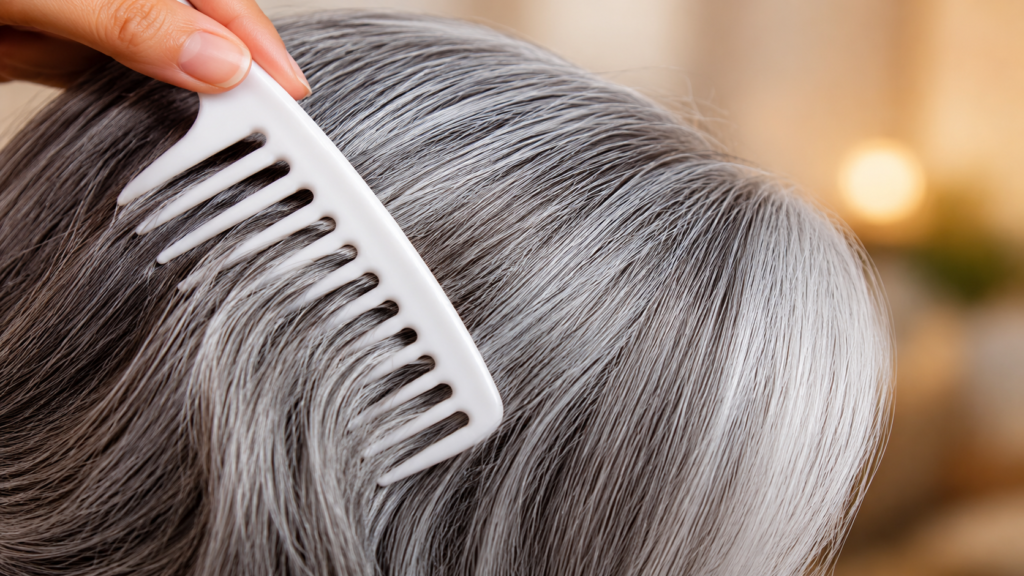
Gray hair can feel like a cosmetic detail, but the science behind pigment loss points to a more complicated story about stress, biology, and time.
Listening to Steven Bartlett’s conversation with mitochondrial scientist Dr. Martin Picard, I heard one detail about stress turning hair gray and that sounded either like a real biological clue or the beginning of a very expensive misunderstanding. So I went looking for what the studies actually show.
Medical note: This article is educational. It doesn’t diagnose, treat, or recommend a medical intervention. Premature or sudden hair changes should be discussed with a qualified clinician, especially when accompanied by fatigue, hair loss, skin changes, nutritional concerns, thyroid symptoms, or other health issues.
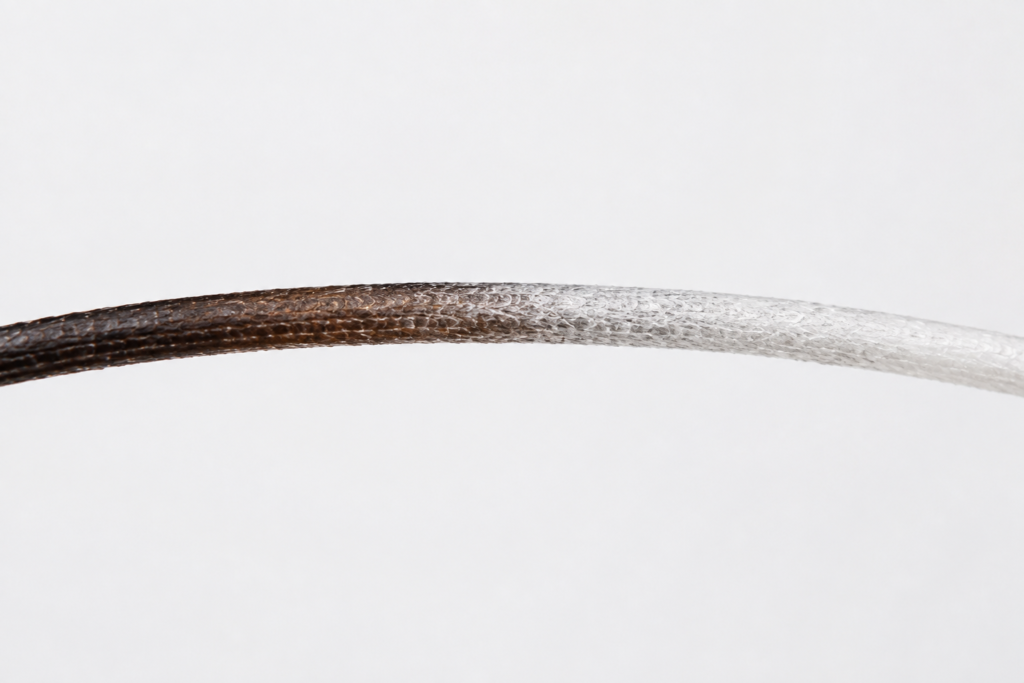
There was a moment in Steven Bartlett’s conversation with Dr. Martin Picard when the whole subject stopped feeling like another anti-aging claim and became something stranger.
Picard wasn’t talking about a supplement, a red light panel, a fasting routine, or the usual vocabulary of rejuvenation content. On Steven Bartlett’s podcast, The Diary Of A CEO, he was talking about one human hair.
One hair.
It had grown dark, then white, then dark again.
I remember that idea stopping me for a second, because it had the exact shape of something that could go in two directions. It could be a real clue about biology, stress, and time. Or it could become the opening line of a very expensive misunderstanding.
That’s usually the point where I start paying closer attention.
Because once a sentence like “gray hair can be reversible” leaves a lab and enters the wellness market, it starts collecting accessories. Mitochondrial support. Stress hacks. Supplement stacks. Red light devices. Fasting protocols. Vacation-as-medicine. The claim may begin as a careful observation, but by the time it reaches the checkout page, it can sound much larger than the evidence underneath it.
So I wanted to know what the study actually showed.
I went back to the eLife paper behind Picard’s claim. I looked at the Nature mouse study that gives the stress-and-gray-hair story a biological mechanism. I checked the clinical review literature on premature graying. I also looked at institutional sources on mitochondria, supplements, and post-exertional malaise, because this topic sits right at the point where good science, understandable hope, and commercial exaggeration start crowding into the same room.
The claim didn’t fall apart.
It got narrower.
And honestly, I liked it more that way.
The science does suggest that some individual human hairs can naturally regain pigment. It also suggests that stress can affect the biology of pigmentation. But it doesn’t show that a person can reliably reverse visible graying across the scalp by relaxing, fasting, taking supplements, improving mitochondria, or buying a product with better lighting than evidence.
That distinction matters.
It may be the whole story.
The eLife team described its method as a way to map “recent life history” in hair pigmentation patterns.Rosenberg et al., eLife, 2021
The Hair As A Timeline
The part of Picard’s explanation that stayed with me is the idea that a hair can work like a biological record.
Not a perfect record. Not a diagnostic test. Not a secret message from your mitochondria written in keratin.
More like a timeline.
Hair grows over time. That means different points along the same strand correspond to different moments in the recent past. If a strand changes from dark to white, or white back to dark, the shaft may preserve a physical trace of what was happening in that follicle while the hair was growing.
That’s what the eLife study tried to measure, and this is where the story becomes smaller than the viral version, but also more solid.
The researchers studied hairs from 14 people and used a method for mapping pigmentation along individual hair shafts. They weren’t running a clinical trial. They weren’t testing a treatment. They weren’t asking whether a supplement, vacation, or meditation routine could reverse gray hair.
They were looking at naturally occurring hairs with changing pigment.
And they found something worth taking seriously.
The central finding was narrow but striking: “white/grey hairs that naturally regain pigmentation.”Rosenberg et al., eLife, 2021
That sentence is enough to change the old assumption that gray hair is always a simple one-way door. But it isn’t enough to build a reversal protocol.
This is where I think the reader has to hold two thoughts at once.
The finding is exciting because it’s limited. A few individual hairs showing repigmentation is scientifically interesting. It suggests the follicle may be more dynamic than people assumed.
But a few hairs aren’t the same as a head of hair. A natural reversal isn’t the same as a treatment. A correlation with life stress isn’t the same as proof that stress relief caused the change.
The internet usually hates that kind of sentence because it slows down the sale.
Unfortunately, slowing down is the point.
What Stress Seems To Do
The stress-and-gray-hair story feels believable because it matches something people have observed for a long time. We have all seen someone seem to age during grief, illness, burnout, prolonged pressure, or a brutal season of life. The phrase “this job gave me gray hair” existed long before molecular biology joined the conversation.
But folk wisdom isn’t enough. The moment the claim became interesting, I wanted the mechanism.
The strongest mechanism comes from a 2020 Nature study led by Bing Zhang and Ya-Chieh Hsu. This was a mouse study, which is important. Mice aren’t humans, and mouse hair biology can’t be pasted directly onto a person looking at the bathroom mirror. Still, the study is useful because it shows a plausible route from acute stress to pigment loss.
In that study, stress activated the sympathetic nervous system, the broad “fight-or-flight” system that prepares the body for danger. That activation released noradrenaline, also known as norepinephrine, near the hair follicle. In the mouse model, that pushed melanocyte stem cells out of their normal reserve state and depleted them.
Once those cells were gone, the follicle couldn’t make pigment normally.
In mice, the Nature paper reported that “acute stress leads to hair greying” through rapid melanocyte stem-cell depletion.Zhang et al., Nature, 2020
This is where the story gets interesting and inconvenient, which is usually where the useful part begins.
The Nature study gives us a strong stress-to-gray-hair mechanism, but in that mouse model the damage looked hard to reverse because the stem-cell reserve was depleted. The eLife human study, meanwhile, found some individual hairs that regained pigment naturally.
Those two findings don’t cancel each other out. They may be describing different stages, species, timelines, and biological conditions.
My read is this: stress can plausibly push pigmentation biology in the wrong direction, but not every pigment change is the same kind of damage. Some follicles may be close to a tipping point. Some may cross it temporarily. Some may be too far past it to come back in any simple way.
That brings us to the most useful idea in the whole article.
The Threshold Model Is The Part Worth Remembering
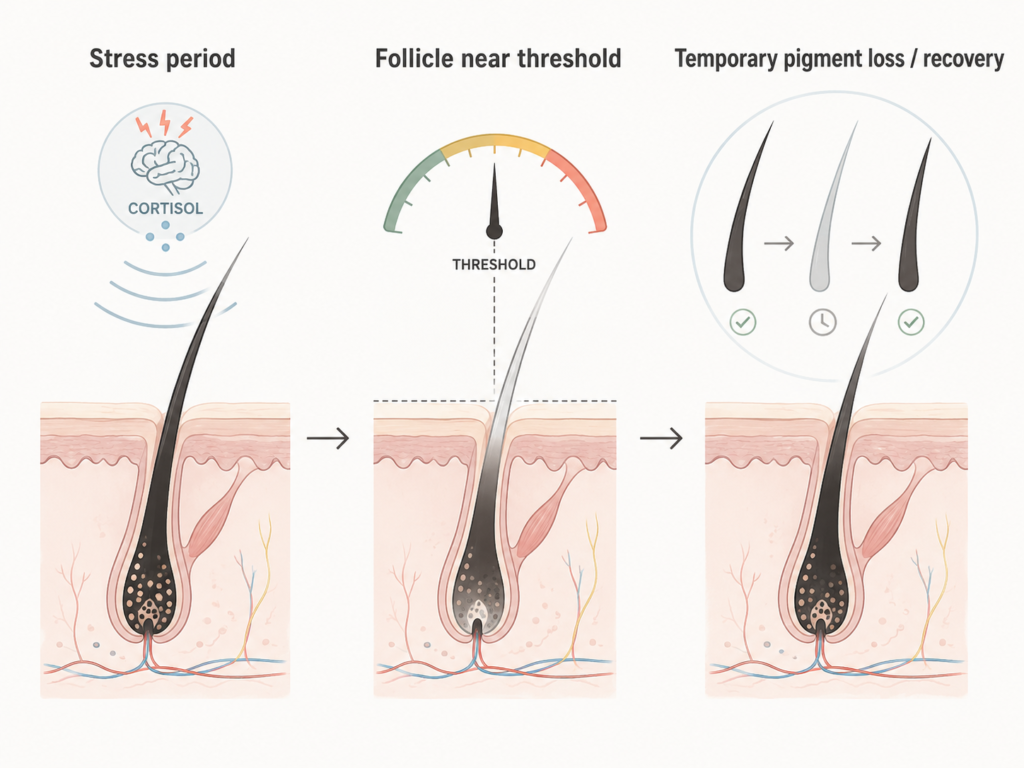
The threshold idea is the part I would keep even if every anti-aging headline disappeared tomorrow.
It gives the story a shape that feels closer to real life.
Imagine a follicle moving slowly toward grayness. Not because of one bad email. Not because someone skipped a supplement. More like a system accumulating pressures over time: age, genetics, oxidative stress, inflammation, hormonal context, nutrition, illness, smoking, and stress physiology.
At some point, the follicle crosses a threshold and grows a hair without normal pigment.
The eLife team’s computational model suggests that reversal may be possible near that threshold. If a follicle has only recently crossed into gray, and if the body’s internal environment changes, that follicle might temporarily regain pigment. But if the follicle crossed the threshold long ago, the model suggests it may be too far gone for simple reversal.
That is a much better story than “stress turns hair gray” or “relax and your gray hair goes away.”
It also explains why the commercial version feels too confident. Biology doesn’t usually behave like a light switch. It behaves more like a system with margins, reserves, thresholds, feedback loops, and timing.
I know that’s less convenient than a promise.
It’s also more believable.
Mitochondria Are Relevant, But Not Magical
The podcast uses gray hair as a doorway into mitochondria, and I understand why. Once you start talking about stress, energy, and biological maintenance, mitochondria are hard to avoid.
They are genuinely central to how cells function. They help convert nutrients and oxygen into ATP, the energy currency cells use to do work. They also participate in signaling, stress responses, cell death, and disease processes.
The NIH explains that mitochondria “produce about 90% of the energy” cells need to function.NIH Research Matters, 2025
Hair follicles are active structures. Growing hair isn’t passive. The follicle is building tissue, coordinating pigment, responding to signals, moving through growth cycles, and managing stress from the surrounding environment.
So yes, mitochondrial biology belongs in the conversation.
In the eLife study, gray hairs showed changes in proteins related to energy metabolism, mitochondria, and antioxidant defenses. That doesn’t mean mitochondria “cause” every gray hair. It means the researchers saw patterns pointing toward energy metabolism and stress-response pathways as part of the picture.
That is enough to be interesting.
It is not enough to sell certainty.
This is where I get cautious, especially with the Money/Buying lens. “Mitochondrial support” has become one of the most flexible phrases in wellness marketing. It can mean sleep, exercise, nutrition, fasting, red light, cold exposure, expensive supplements, or almost any habit someone wants to wrap in cellular language.
Some of those practices may be useful for some people. Some may be reasonable for general health. Some may be wildly oversold. And some may distract from medical issues that need more than a product description.
The careful sentence is:
Mitochondrial function may be involved in hair follicle aging and stress response.
The unsafe sentence is:
Improve your mitochondria and your gray hair will reverse.
One belongs in an article. The other belongs in an ad that should make you check the refund policy.
The 60 Percent Claim Needs Context
One claim from the podcast that made me slow down was the idea that a stress hormone increased energy expenditure by 60%.
That number sounds huge. It also sounds personal. A stressed listener may hear it as: when I’m stressed, my body burns 60% more energy.
But Picard adds the crucial limit in the conversation: this was in cells in a dish, not a whole person living a whole day.
That distinction matters.
Cells in a laboratory allow researchers to isolate a question. If cells are exposed to a stress-related signal, how much does their energy demand change? That’s useful science. But a human body isn’t a dish of cells. It has organs, feedback loops, sleep, food, movement, hormones, behavior, illness, emotional interpretation, and recovery layered together.
So I wouldn’t use the 60% number as a lifestyle claim.
I would use it as a reminder that stress is biologically active.
A racing heart costs energy. Tense muscles cost energy. Poor sleep changes recovery. Rumination isn’t just a thought floating above the body; it’s part of a physiological state. Over time, repeated stress responses may interact with inflammation, metabolism, sleep, and health.
We don’t need to exaggerate the number to make the point matter.
The point already matters.
Before Buying Anything, I Would Ask Four Questions
This is where the story becomes a consumer decision.
The moment an anti-aging idea becomes emotionally attractive, the market arrives.
It usually arrives well dressed.
It brings supplements, tests, subscriptions, powders, devices, coaching programs, protocols, and very polished language.
Some of these products may be harmless. Some may be useful for specific goals. Some may be overpriced. Some may create a new anxiety and then sell the proposed solution.
So before buying anything marketed around gray hair reversal, mitochondrial repair, or anti-aging pigment recovery, I would ask four questions.
First: was the product tested for gray hair reversal in humans?
Not “supports cellular energy.” Not “promotes antioxidant defense.” Not “inspired by mitochondrial science.” Was it actually tested for the outcome being advertised?
Second: what was the study design?
A randomized controlled trial is stronger than a small open-label study. A human trial is more relevant than a mouse study. A measured pigment outcome is stronger than before-and-after photos collected by a brand. A study on hair growth isn’t automatically a study on hair pigmentation.
Third: who benefits if I believe this?
That sounds cynical, but I don’t think it is. It’s basic consumer hygiene. If a small scientific clue becomes a monthly subscription, the burden of proof should rise with the price.
Fourth: what am I ignoring while chasing this?
Premature graying can sometimes be associated with nutritional deficiencies, thyroid issues, smoking, chronic disease, medication effects, or other conditions. Stress also interacts with sleep, mood, blood pressure, diet, alcohol, and exercise. A product that promises cosmetic reversal may distract from the less glamorous question:
Is something else going on?
That boring question is often the useful one.
The Supplement Shelf Needs A Reality Check
Affiliate disclosure: This section contains paid links. As an Amazon Associate I earn from qualifying purchases. These products aren’t proven to reverse gray hair, regrow pigment, or slow aging. They’re included only as examples of supplement categories that may be useful when a real nutritional gap exists.
This is where I would be careful with wording, because this is exactly where a useful article can accidentally become a sales page.
The evidence doesn’t show that taking a supplement will reliably turn gray hair dark again. What studies support is more modest: certain nutrient deficiencies can affect the body in measurable ways, and correcting a confirmed deficiency can help restore normal biological function.
That is different from buying a bottle because an algorithm whispered “anti-aging” at you.
For premature graying, research has found associations with nutrients such as vitamin B12, iron-related markers, vitamin D, copper, and others. But association isn’t a cure. It means some people with early graying may be worth checking for deficiencies, especially if the graying is unusually early, sudden, or paired with fatigue, hair shedding, dietary restriction, thyroid symptoms, anemia symptoms, or other health changes.
Here is the cleanest buying rule I can give:
Don’t buy a promise. Buy a correction, when there’s a reason to believe something is low.
Vitamin B12: useful when the problem is actually B12
Vitamin B12 matters for red blood cell formation, neurological function, and DNA-related processes. Low B12 can happen with restrictive diets, low intake of animal products, some digestive conditions, age-related absorption issues, or certain medications.
That doesn’t make B12 a gray-hair reversal pill. It makes B12 a nutrient worth checking if the broader picture points that way.
Example product link: Vitamin B12 option
Vitamin D: common deficiency, not a hair-color switch
Vitamin D is involved in bone health, immune function, and many cellular processes. Low vitamin D is common, especially for people with limited sun exposure, darker skin, older age, certain diets, or specific medical conditions.
Some studies have explored links between vitamin D levels and premature hair graying, but that doesn’t prove that vitamin D supplements restore pigment. The stronger claim is simpler: if vitamin D is low, correcting it can matter for general health.
Example product link: Vitamin D option
Iron: important, but not casual
Iron deserves a stricter warning.
Iron deficiency can affect energy, red blood cells, oxygen transport, and hair biology. But too much iron can be harmful. This is especially important for men, postmenopausal women, and anyone with conditions that affect iron storage.
So I would put iron in the “test first” category.
Example product link: Iron option
Copper: biologically relevant, easy to oversell
Copper is involved in melanin biology, antioxidant enzymes, connective tissue, and iron metabolism. That makes it tempting for gray-hair marketing, because melanin is the pigment that gives hair its color.
But temptation isn’t evidence.
Routine copper supplementation without testing or medical reason isn’t a smart default. Too much copper can be toxic, and copper also interacts with other minerals, especially zinc.
Example product link: Copper option
A basic multivitamin: sometimes practical, rarely magical
A multivitamin can be useful for people whose diets are inconsistent, restricted, low in variety, or temporarily disrupted. It isn’t glamorous. It isn’t a mitochondrial upgrade kit. It’s more like nutritional insurance with limits.
The strongest case for a multivitamin isn’t “this will reverse aging.” It’s “this may help cover small intake gaps when food quality is uneven.”
Example product link: Multivitamin option
Example product link: Additional supplement option
What I Think Is Reasonable
The safest actions aren’t very cinematic.
That doesn’t make them weak.
Move regularly if your body can tolerate it. Sleep enough. Avoid smoking. Eat in a way that prevents deficiencies. Manage stress in ways that actually fit your life. If graying is premature, sudden, patchy, or paired with other symptoms, ask a clinician whether testing for B12, folate, thyroid function, iron status, or other relevant markers makes sense.
None of that guarantees hair color.
But it lines up with what researchers already know about general health, mitochondrial function, and stress biology.
There is one important exception I don’t want to bury. If this topic moves into chronic fatigue syndrome, ME/CFS, or long COVID, exercise advice needs to slow down. The CDC notes that post-exertional malaise can worsen symptoms after even minor physical or mental exertion and may last days or weeks. For those patients, “just exercise for your mitochondria” can be the wrong message.
The CDC warns that PEM can follow “even minor physical or mental exertion” and last days or weeks.CDC ME/CFS clinical care guidance, 2024
That caveat matters because mitochondrial language can flatten very different situations into one wellness slogan. A healthy person trying to improve fitness isn’t the same as someone with post-exertional malaise. A person with a few new gray hairs isn’t the same as someone with sudden hair changes and fatigue.
The body isn’t one market segment.
The Better Way To Read The Claim
After sitting with the podcast, then with the studies, I don’t think the right takeaway is “gray hair is reversible.”
That sentence is too broad.
I also don’t think the right takeaway is “stress has nothing to do with gray hair.”
That sentence is too dismissive.
The better takeaway is narrower and more useful: some individual hairs can regain pigment naturally, stress can plausibly affect pigmentation biology, and some follicles may move back and forth near a biological threshold. But that doesn’t mean a person can reliably reverse visible graying by buying a product or following a protocol.
This is why I keep coming back to the hair-as-timeline idea.
It doesn’t sell a miracle. It changes the question.
Instead of asking only, “How do I erase the gray?” it asks, “What was my body recording while this strand was growing?”
That question is more interesting. It is also less exploitable.
Gray hair can matter. For many people, it does. Hair is identity, age, culture, self-image, confidence, and sometimes grief. People are allowed to care about it.
But caring about something makes us easier to sell to.
So my final rule is simple:
When a claim connects stress, mitochondria, and anti-aging, don’t reject it automatically. But don’t buy the shortcut either. Ask what was measured, in whom, under what conditions, and whether the product being sold was tested for the outcome being promised.
A strand of hair may hold a trace of the past. It may record a period when the body was under pressure, adapting, struggling, or recovering.
That’s remarkable enough without turning it into a miracle.
The gray hair isn’t the scam.
The shortcut might be.
Could South Korea’s Market Crash Break the Global Economy?
Sources And References
- Rosenberg AM, Rausser S, Ren J, et al. “Quantitative mapping of human hair greying and reversal in relation to life stress.” eLife. 2021. https://elifesciences.org/articles/67437
- Zhang B, Ma S, Rachmin I, et al. “Hyperactivation of sympathetic nerves drives depletion of melanocyte stem cells.” Nature. 2020. https://www.nature.com/articles/s41586-020-1935-3
- Kumar AB, Shamim H, Nagaraju U. “Premature Graying of Hair: Review with Updates.” International Journal of Trichology. 2018. https://pmc.ncbi.nlm.nih.gov/articles/PMC6290285/
- NIH Research Matters. “Mitochondria and health.” Published July 22, 2025. https://www.nih.gov/news-events/nih-research-matters/mitochondria-health
- CDC. “Strategies to Prevent Worsening of Symptoms.” ME/CFS clinical care guidance. Updated May 10, 2024. https://www.cdc.gov/me-cfs/hcp/clinical-care/treating-the-most-disruptive-symptoms-first-and-preventing-worsening-of-symptoms.html
- Appelman B, Charlton BT, Goulding RP, et al. “Muscle abnormalities worsen after post-exertional malaise in long COVID.” Nature Communications. 2024. https://www.nature.com/articles/s41467-023-44432-3
- Liu CC, et al. “The energetic stress cytokine GDF15 is elevated in the context of chronic and acute psychosocial stress.” 2024. https://pmc.ncbi.nlm.nih.gov/articles/PMC11042343/
- Federal Trade Commission. “Health Products Compliance Guidance.” https://www.ftc.gov/business-guidance/resources/health-products-compliance-guidance
- Amazon Associates Central. Associate disclosure guidance. https://affiliate-program.amazon.com/help/node/topic/GPXFHVYZMTGPUMPE
- NIH Office of Dietary Supplements. Fact sheets for vitamin B12, vitamin D, iron, copper, and multivitamin/mineral supplements. https://ods.od.nih.gov/
