
Vehicles
Why the Chinook Has Two Rotors
The CH-47 Chinook looks strange until you understand the job. Its tandem rotors cancel torque, support a long cargo body, and keep the rear ramp clear for heavy-lift work.
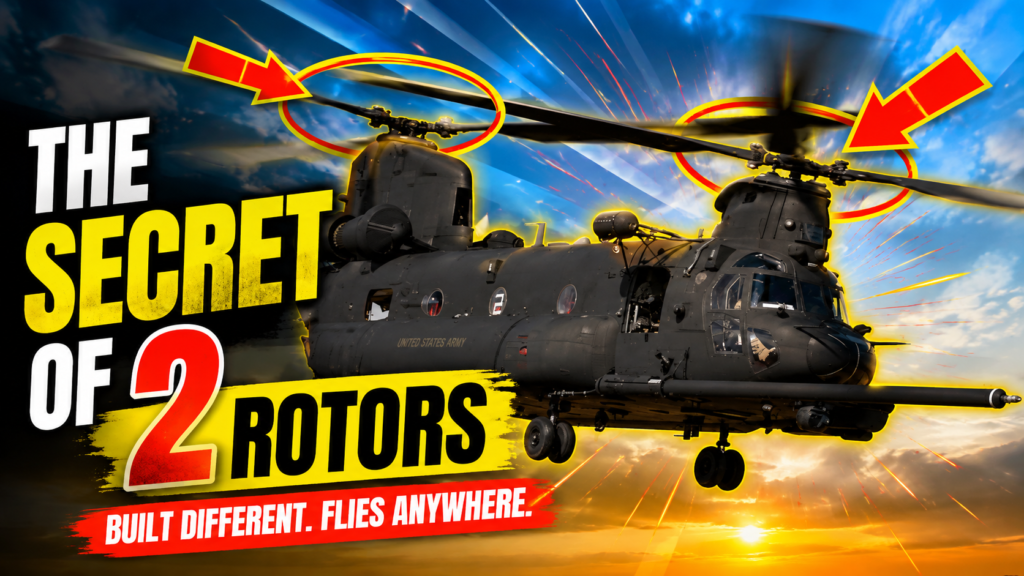
The Chinook’s tandem rotor layout helps explain why this heavy-lift helicopter is built so differently from conventional helicopters.
So, why the Chinook has two rotors? The first thing that makes the CH-47 Chinook look strange is not that it has two rotors. It is where they are.
One rotor sits near the front. The other sits near the back. Between them is a long cargo body that looks less like a normal helicopter cabin and more like a flying loading bay. Most helicopters give you one big rotor above the cabin and a smaller tail rotor out back. The Chinook looks as if someone took that familiar layout, pulled it long, removed the tail rotor, and decided the cargo space mattered more than looking tidy.
That impression is not far from the truth.
The Chinook has two main rotors because it is a heavy-lift helicopter, and heavy lift changes the design problem. The tandem rotors cancel torque without needing a tail rotor, put both large rotors to work producing useful lift, spread that lift across a long fuselage, and keep the rear of the aircraft clear for a loading ramp. The odd shape is not a flourish. It is the machine solving its job in public.
I like the Chinook more once the answer becomes that practical. It is not weird for the sake of being weird. It looks the way it does because cargo, torque, access, and rough landing zones all pulled the aircraft in the same direction.
What Job Was The Chinook Built To Do?
Start with the mission, because the mission explains the shape better than the silhouette does.
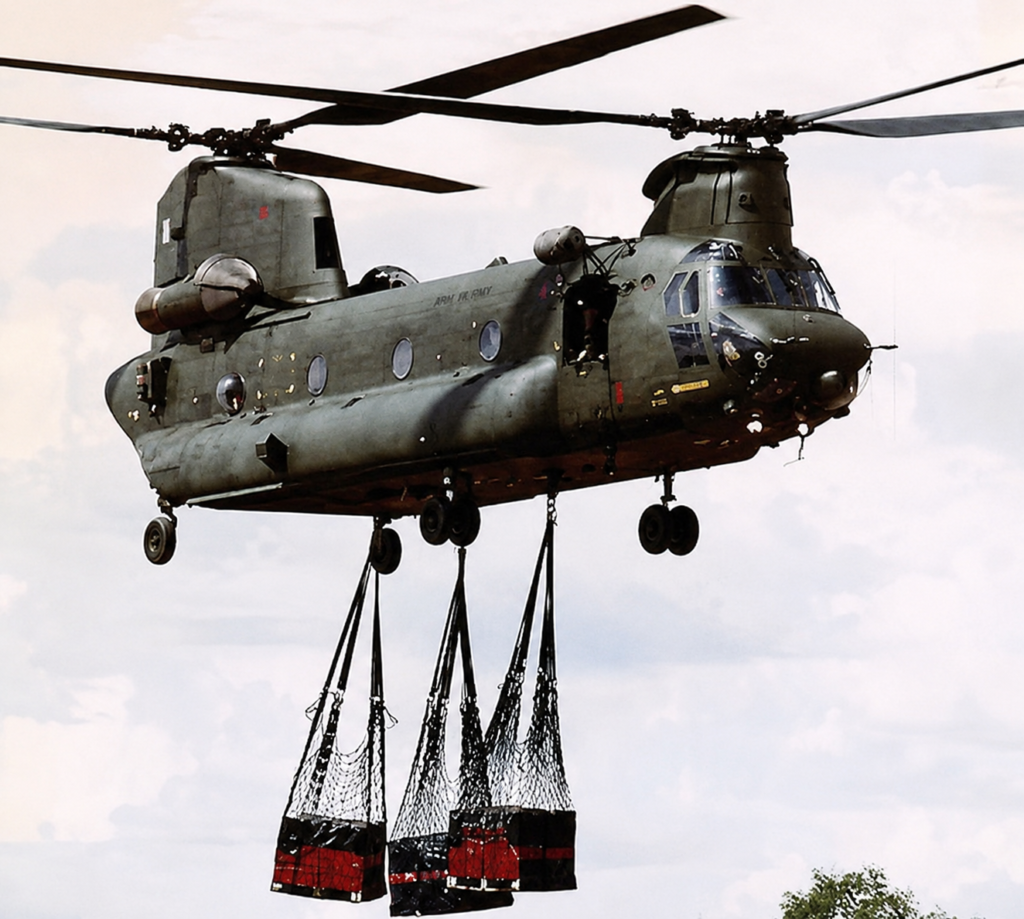
Boeing describes the H-47 Chinook as a heavy-lift aircraft used for cargo and troop transport, search and rescue, casualty evacuation, special operations, and disaster relief. The U.S. Army describes the CH-47F as its only heavy-lift cargo helicopter. Those descriptions are not just brochure language. They tell you what the aircraft must make room for: people, supplies, litters, vehicles, artillery, external sling loads, fuel, crew, and enough structure to lift all of it vertically.
A light utility helicopter can afford to be compact. A heavy-lift helicopter has a different problem. It needs internal volume, usable floor space, loading access, high payload capacity, and control in difficult places where a runway may not exist. Once that is the assignment, the aircraft stops being a helicopter with a cargo compartment and starts becoming a cargo system that happens to fly.
The layout follows from that job. A long fuselage gives the aircraft useful interior space. A rear ramp lets cargo and people move in and out quickly. Two main rotors support that long body from both ends instead of forcing one central rotor to do nearly everything.
The result looks unusual because the usual helicopter layout was not the cleanest answer to this job.
Why Does A Normal Helicopter Need A Tail Rotor?
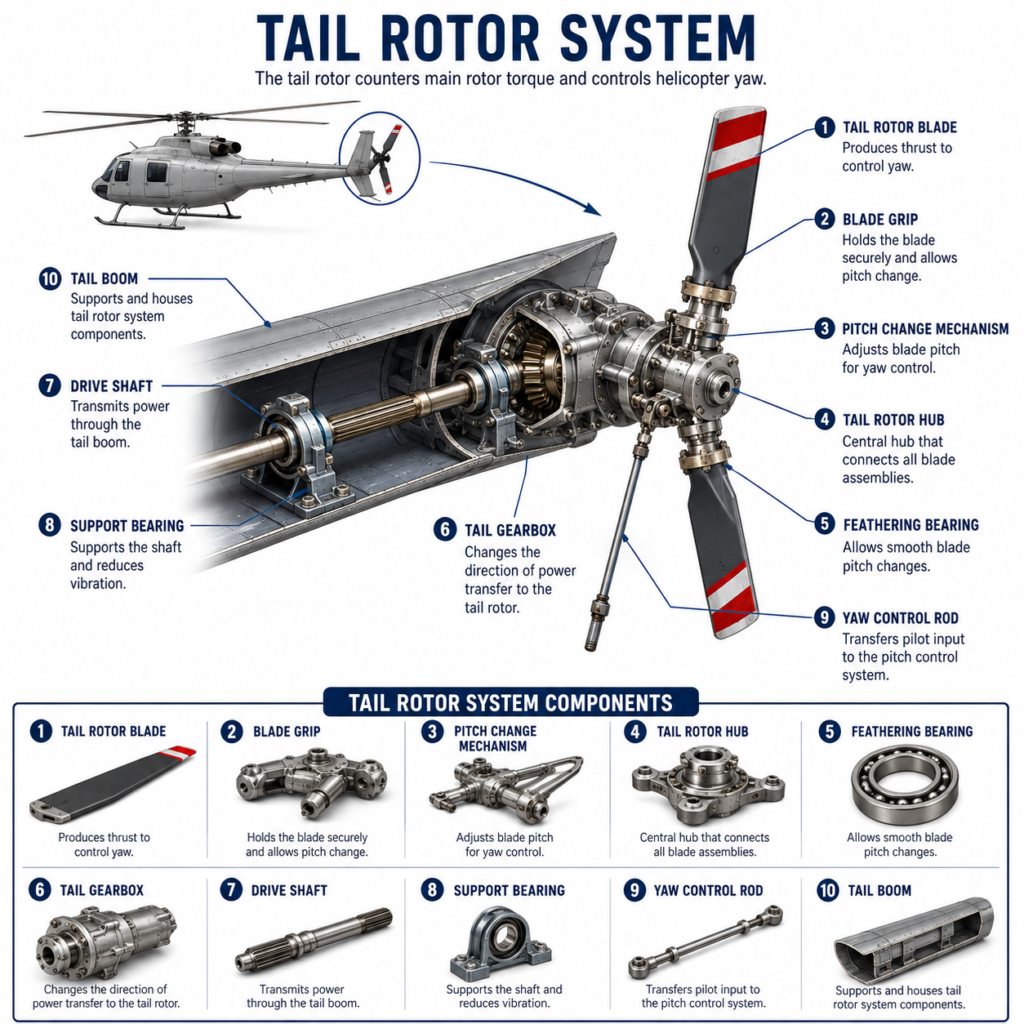
To understand why the Chinook has two rotors, it helps to look at what it does not have.
Most single-main-rotor helicopters need a tail rotor because the main rotor creates torque. If the main rotor spins one way, the fuselage wants to rotate the other way. That is basic Newtonian payback, and it is not optional. Without some form of anti-torque system, the helicopter would have a serious control problem instead of a stable hover.
The tail rotor solves that by pushing sideways. It counters the turning tendency from the main rotor and helps the pilot control heading, especially in a hover. This is a proven layout, and for many helicopters it is exactly the right compromise.
But it is still a compromise.
A tail rotor uses engine power without helping lift the aircraft upward. It is doing important work, but it is not carrying the cargo. For a small or medium helicopter, that may be a sensible cost. For a machine whose entire reason for existing is heavy lift, the tradeoff becomes more interesting.
The Chinook solves the torque problem with two counter-rotating main rotors. The FAA’s helicopter guidance explains that tandem rotor helicopters do not use an anti-torque rotor because their two rotor systems rotate in opposite directions and counteract torque. In plain English, one rotor’s twisting tendency is balanced by the other’s.
That is the first big advantage: the Chinook does not need a tail rotor to keep the fuselage from spinning, and both large rotors contribute to lifting the aircraft.
Why Are The Rotors At The Front And Back?
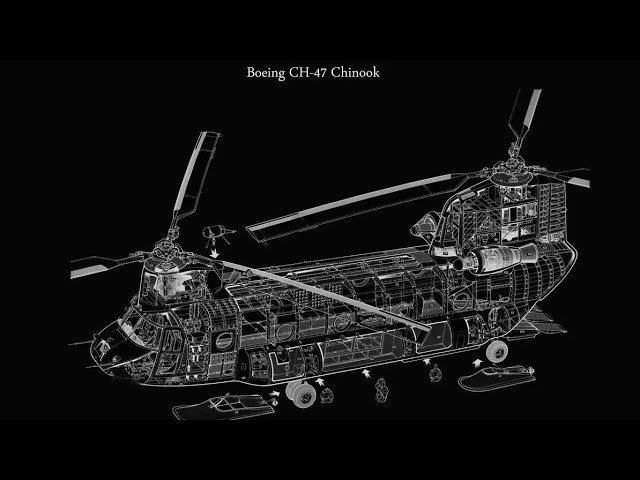
The front-and-back placement is not only about torque. It is also about where the lift needs to be.
Imagine lifting a long, loaded box from one point in the middle. You can do it if the weight is balanced perfectly, but the whole task becomes sensitive to where the load sits. Now imagine lifting that same box from near both ends. The load still matters, but the shape of the lift finally matches the shape of the object.
That is the simple version of the Chinook’s logic.
The aircraft has a long cabin because it is meant to carry useful loads, not just passengers sitting neatly under one rotor mast. Two rotors let the aircraft distribute lift across the fuselage, with cargo living between the lifting systems. This does not mean weight and balance stop mattering. They absolutely matter. But the tandem layout gives the aircraft a structural and aerodynamic arrangement that fits a long transport body.
Seen as a small helicopter, the Chinook can look awkward. Seen as a flying cargo truck, the same shape becomes much easier to read. The rotors are not decorative bookends. They are part of what makes the middle of the aircraft valuable.
Why Is The Rear Ramp Such A Big Deal?
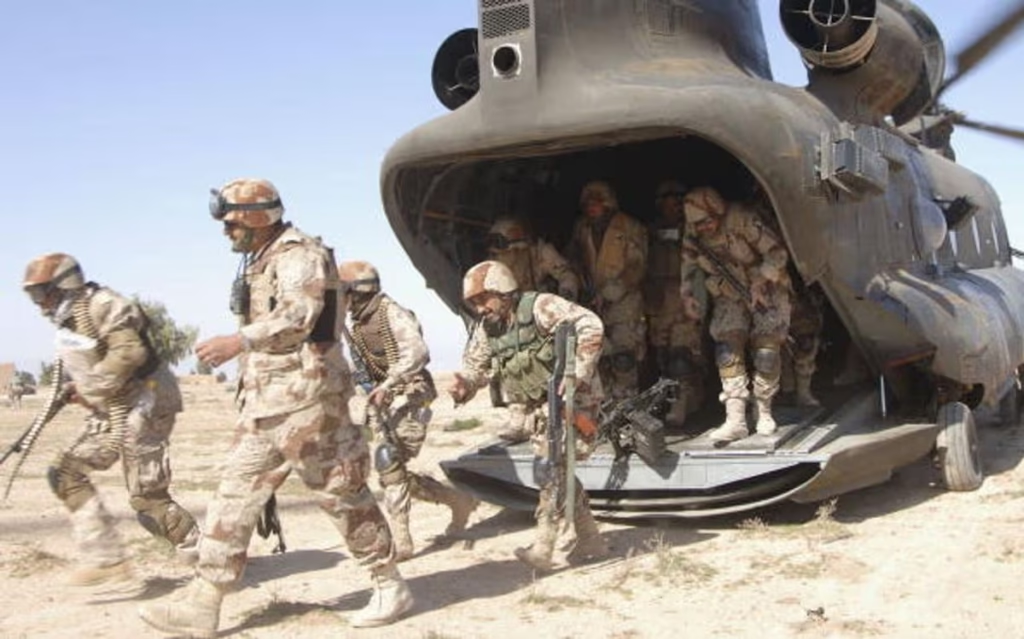
The rear ramp may be the most underrated reason the Chinook looks the way it does.
For a cargo helicopter, the back of the aircraft is not just the end of the fuselage. It is the working entrance. Troops can board through it. Stretchers, pallets, supplies, small vehicles, and mission equipment can move through it. In disaster relief or military logistics, the ability to land, open the ramp, load or unload quickly, and leave again can matter more than almost any styling or aerodynamic elegance.
A conventional tail boom and tail rotor can make that rear access harder to design around. A spinning tail rotor is not something you want near people, cargo handlers, or vehicles moving behind the aircraft. You can work around a tail rotor, and many aircraft do, but it competes with clean rear access.
Boeing makes this point directly in its Chinook material, noting that the tandem layout allows rear ramp access without tail rotor clearance limits. That sentence is doing a lot of practical work. The Chinook’s rear can be a cargo door because the aircraft does not need to put an anti-torque rotor there.
The design stops feeling like an aviation curiosity once the loading problem comes into view. The aircraft can put its useful opening exactly where a cargo aircraft wants it: at the back.
Is The Chinook Just Using Two Helicopters’ Worth Of Rotor?
Not really. The Chinook is not two separate helicopter systems casually sharing one fuselage.
The forward and aft rotors are coordinated through the aircraft’s drivetrain and control system. Their blades must remain synchronized, and the aircraft uses changes in rotor pitch and rotor-disc attitude to manage lift, pitch, roll, and yaw. The FAA describes tandem rotor directional control as a coordinated action between the forward and aft rotor discs rather than a tail rotor simply pushing the tail sideways.
The useful way to think about it is this: the Chinook’s two rotors are not only lifting devices. They are also part of the control logic of the aircraft.
That is more complex than a simple mental picture of “one rotor plus another rotor.” The tandem layout needs transmissions, shafts, synchronization, flight controls, and structure that can handle large loads at both ends of the aircraft. It is not an easy way to build a helicopter. It is a way to build a helicopter when the payoff is worth the complexity.
For the Chinook, the payoff is heavy lift, rear access, and a cabin layout that matches the mission.
What Do The Numbers Tell Us?
The numbers make the design less abstract.
Boeing lists the CH-47F Block II with a maximum gross weight of 54,000 pounds and a useful load of 27,700 pounds. It also lists two Honeywell T55 engines, each rated at 4,777 shaft horsepower. The Army’s older CH-47F profile lists a 50,000-pound maximum gross weight and sling-load capacity figures that reach 26,000 pounds on the center hook.
Those figures should not be read as everyday promises for every mission, weather condition, altitude, or load arrangement. Helicopter performance depends on weight, altitude, temperature, configuration, and operating conditions. But the scale tells you what kind of machine this is. The Chinook is not a helicopter that occasionally carries cargo. It is a cargo aircraft designed around vertical lift.
Those numbers make the tandem rotor layout feel less exotic and more practical. When the aircraft itself may weigh tens of thousands of pounds and still needs to carry serious payloads, wasting a large portion of the design on a tail rotor would be less attractive. The Chinook uses two main rotors because the mission rewards putting as much rotor system as possible into useful lift and control.
Why Not Build Every Helicopter This Way?
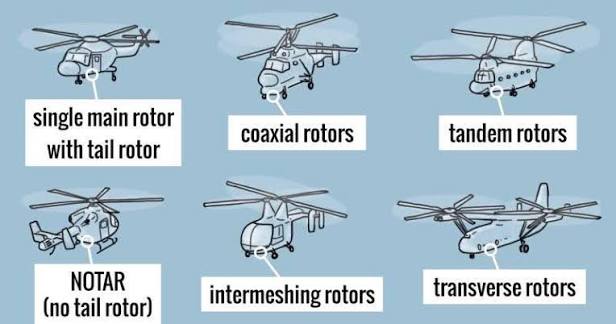
If the Chinook’s tandem rotors are so useful, the obvious question is why more helicopters do not copy the layout.
Most helicopters are not trying to be Chinooks.
A tandem rotor helicopter adds mechanical and structural complexity. It needs two rotor systems, a synchronized drivetrain, a long fuselage, and controls that coordinate the rotors properly. For a smaller helicopter used for training, patrol, medical transport, utility work, observation, or short-range passenger movement, a single main rotor with a tail rotor can be lighter, simpler, cheaper, and easier to package.
The tandem layout shines when the mission asks for a long cabin, heavy payload, rear loading, external loads, and useful performance away from prepared airfields. It is not universally better. It is better for a specific job.
Vehicle design is full of tempting shortcuts. It is easy to look at a machine and ask why everything else is not built the same way. Usually, the better question is more specific: what problem was this machine allowed to optimize for?
The Chinook was allowed to optimize for lift and access, and the aircraft’s unusual shape is the visible result of that priority.
Why Has The Shape Lasted So Long?

The first Chinook prototype flew in 1961, and the aircraft has been upgraded many times since. In 2026, the Army marked the final CH-47F Block I delivery and shifted focus toward Block II production and modernization. That is a remarkable run for an aircraft whose basic outline is still instantly recognizable.
The persistence of the shape does not mean nothing changed. Engines, avionics, flight controls, drivetrain components, structure, fuel systems, and sustainment all evolved. Boeing’s Block II material points to changes such as structural improvements, redesigned fuel tanks, an improved drivetrain, and open avionics architecture. The Army has also emphasized modernization as a way to keep the Chinook relevant for future heavy-lift missions.
What stayed was the core idea: two large rotors, a long cargo body, and rear access.
That is usually a sign that the original configuration solved the right problem. If the job is still moving heavy loads vertically into places that do not offer runways, the Chinook’s silhouette still makes sense. It may look old-fashioned next to newer aircraft concepts, but the basic layout keeps answering a very current logistics question.
What Is The Real Answer?
The Chinook has two rotors because a heavy-lift helicopter needs more than lift. It needs useful lift in the right places.
The tandem rotors cancel torque without a tail rotor. They put both major rotors to work holding up the aircraft and the load. They spread lift across a long fuselage. They keep the rear clear for a loading ramp. They make the aircraft better suited to cargo, troops, sling loads, disaster relief, and rough landing zones than a more conventional layout would be.
That does not make the Chinook simple. It makes it purposeful.
The aircraft looks strange because most of us are used to helicopters where the tail exists partly to solve the torque problem. The Chinook’s tail is doing something else. It is part of a cargo body, with a working ramp at the back and another main rotor above it. Once you see that, the design stops looking like two rotors for spectacle and starts looking like one of the most direct answers in aviation: lift at the front, lift at the back, cargo in the middle.
FAQ
Why does the Chinook have two rotors instead of one?
The Chinook uses two counter-rotating main rotors to cancel torque, produce useful lift at both ends of the aircraft, and support a long cargo fuselage. That layout is especially useful for heavy-lift transport.
Does the Chinook have a tail rotor?
No. The Chinook does not need a tail rotor because its two main rotors rotate in opposite directions and counteract each other’s torque.
Do both Chinook rotors lift the aircraft?
Yes. Both the forward and aft rotors are main rotors. Unlike a tail rotor on a conventional helicopter, both are part of the aircraft’s lift system.
Why is the Chinook good for cargo?
The tandem rotor layout leaves the rear of the aircraft clear for a loading ramp, supports a long cabin, and helps the aircraft carry internal and external loads into areas without runways.
Is a tandem rotor helicopter better than a normal helicopter?
Not always. Tandem rotors are useful for heavy-lift missions, but they add complexity. Many helicopters use a single main rotor and tail rotor because that layout is lighter, simpler, and better suited to their missions.
FAQ
Why does the Chinook have two rotors instead of one?
The Chinook uses two counter-rotating main rotors to cancel torque, produce useful lift at both ends of the aircraft, and support a long cargo fuselage. That layout is especially useful for heavy-lift transport.
Does the Chinook have a tail rotor?
No. The Chinook does not need a tail rotor because its two main rotors rotate in opposite directions and counteract each other’s torque.
Do both Chinook rotors lift the aircraft?
Yes. Both the forward and aft rotors are main rotors. Unlike a tail rotor on a conventional helicopter, both are part of the aircraft’s lift system.
Why is the Chinook good for cargo?
The tandem rotor layout leaves the rear of the aircraft clear for a loading ramp, supports a long cabin, and helps the aircraft carry internal and external loads into areas without runways.
Is a tandem rotor helicopter better than a normal helicopter?
Not always. Tandem rotors are useful for heavy-lift missions, but they add complexity. Many helicopters use a single main rotor and tail rotor because that layout is lighter, simpler, and better suited to their missions.
Internal Links
- Related Vehicles article: Why American Semi-Trucks Have Long Noses
- Related Cars article: Top 10 Cars That Lose Value the Fastest
External Sources
- Boeing – H-47 Chinook: https://www.boeing.com/defense/military-rotorcraft/h-47-chinook
- U.S. Army – CH-47 Chinook Helicopter: https://www.army.mil/article/137584/CH_47_CHINOOK_HELICOPTER/
- U.S. Army – Final CH-47F Block I delivery and Block II transition: https://www.army.mil/article/293169/transition_to_the_future_pm_cargo_delivers_final_ch_47f_block_i_shifts_focus_to_block_ii_production
- FAA – Helicopter Flying Handbook: https://www.faa.gov/regulations_policies/handbooks_manuals/aviation/helicopter_flying_handbook
- Vertical Flight Society Vertipedia – CH-47 prototype first flight: https://vertipedia.vtol.org//milestones/getMilestone?milestoneid=261
