
Entertainment
Dune Before Part Three: The Books, the Movies and Why This Story Keeps Being Rebuilt
Part Three will not just continue Paul Atreides' story. By adapting Dune Messiah, it turns his victory into a warning about power, prophecy and what happens when a man becomes too useful as a god.

Dune: Part Three moves the story from Paul Atreides' rise to the consequences of the myth built around him. Editorial illustration created for HFD.
Dune: Part Three is not arriving as just another sequel.
It is arriving at the point where the story stops behaving like a rise-to-power epic and becomes something colder, stranger, and more dangerous.
The first two Denis Villeneuve films followed Paul Atreides from noble heir to desert survivor to revolutionary figure. They gave audiences the fall of House Atreides, the brutality of Arrakis, the power of spice, the mystery of the Bene Gesserit, and the birth of Muad’Dib.
That already sounds enormous.
But in Frank Herbert’s world, Paul’s victory is not the end of the story. It is the moment the story begins accusing itself.
The official Dune: Part Three site presents the film as the conclusion to Villeneuve’s trilogy, directed by Denis Villeneuve, written by Villeneuve and Brian K. Vaughan, and based on Frank Herbert’s Dune Messiah. The release is listed for December 18, 2026.
That choice matters. Dune Messiah is not simply “more Dune.” It is the book where Herbert turns the legend inside out and asks what happens when a gifted, wounded, brilliant young man becomes too useful as a god.
The first two films showed how Paul became powerful.
The next chapter asks what that power has already done to him.
The Story Was Ancient Before Paul Arrived
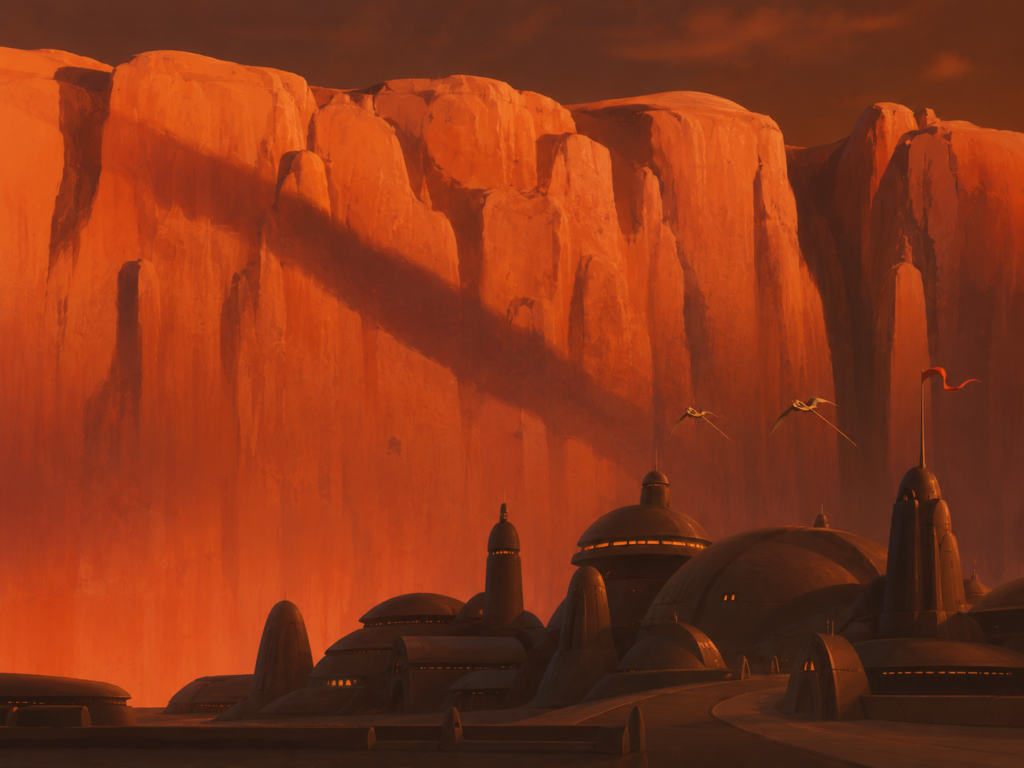
One reason Dune feels so heavy is that its universe seems old before the main character enters it.
By the time Paul Atreides is sent to Arrakis, humanity has already crossed the stars, built empires, fought wars, abandoned intelligent machines, and reorganized civilization around that absence.
There are no ordinary thinking computers in this future. After a long-ago revolt against artificial minds, human society forbids machines made in the likeness of human thought. So civilization adapts in the most Dune way possible.
People become the technology.
Mentats train their brains to process information like living computers. The Bene Gesserit master psychology, politics, genetics, and control over the body. The Spacing Guild depends on spice to help its Navigators perceive safe routes through space.
It is a future with interstellar travel, noble houses, sword fights, religious engineering, and political marriages.
Progress took the scenic route.
At the center of everything is Arrakis, the desert planet also known as Dune. It is brutal, dry, sacred to the Fremen, and almost impossibly valuable because it is the only known source of melange, the spice.
Spice extends life. It expands awareness. It makes interstellar travel possible.
Control Arrakis, and you do not merely control a planet. You control the circulation system of an empire.
Arrakis Is Not Just Where the Story Happens
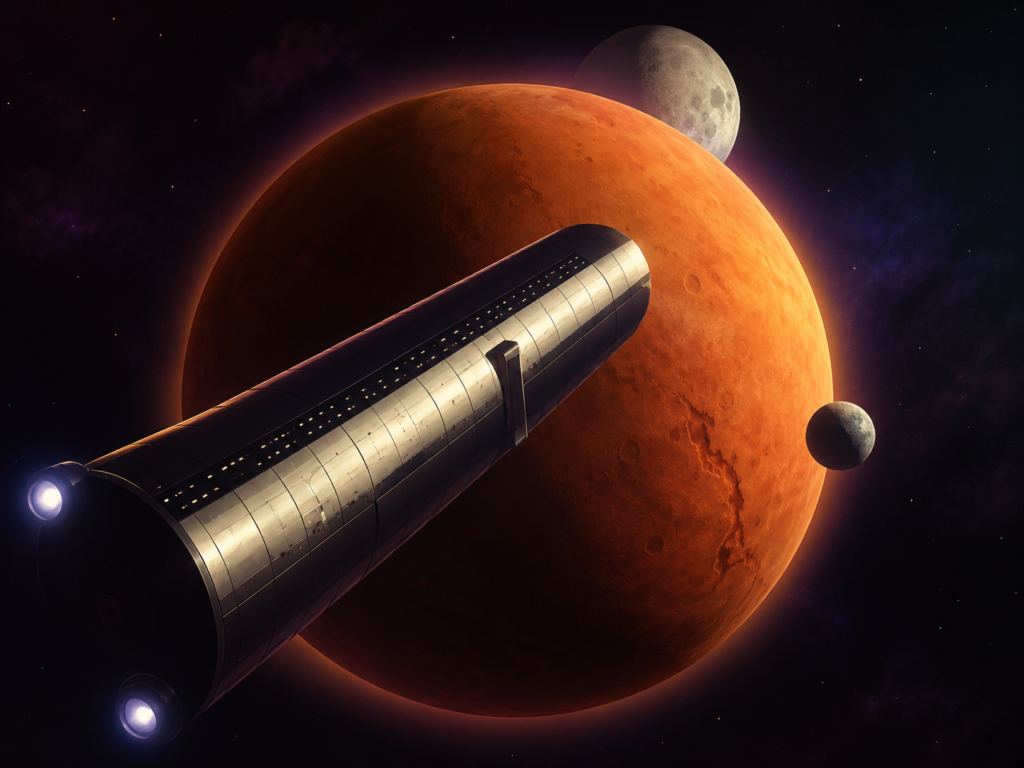
Arrakis is easy to remember for the sandworms. A creature hundreds of meters long rising from beneath the desert does not exactly blend into the background.
But Herbert did not build Arrakis as a backdrop. He built it as an ecosystem.
Water scarcity shapes religion. Stillsuits recycle body moisture because wasting water is not impolite; it is suicidal. The Fremen do not simply live in the desert. They understand its rhythms, its danger, its hidden water, and its long ecological dream better than any imperial power sent to exploit it.
That is why Arrakis works as the heart of the story. It does not merely host the plot. It teaches the plot how to move.
The empire sees Arrakis as a resource. The Harkonnens see it as a machine for wealth. The Emperor sees it as a political lever. The Bene Gesserit see it as a place where belief can be planted, shaped, and later used.
The Fremen see a home.
That difference is one reason Dune keeps surviving adaptation after adaptation. Under the battles and prophecies, it is also a story about ecology, colonial power, extraction, survival, and what happens when outsiders mistake a living world for an object.
Paul Looks Like the Hero Because That Is the Trap
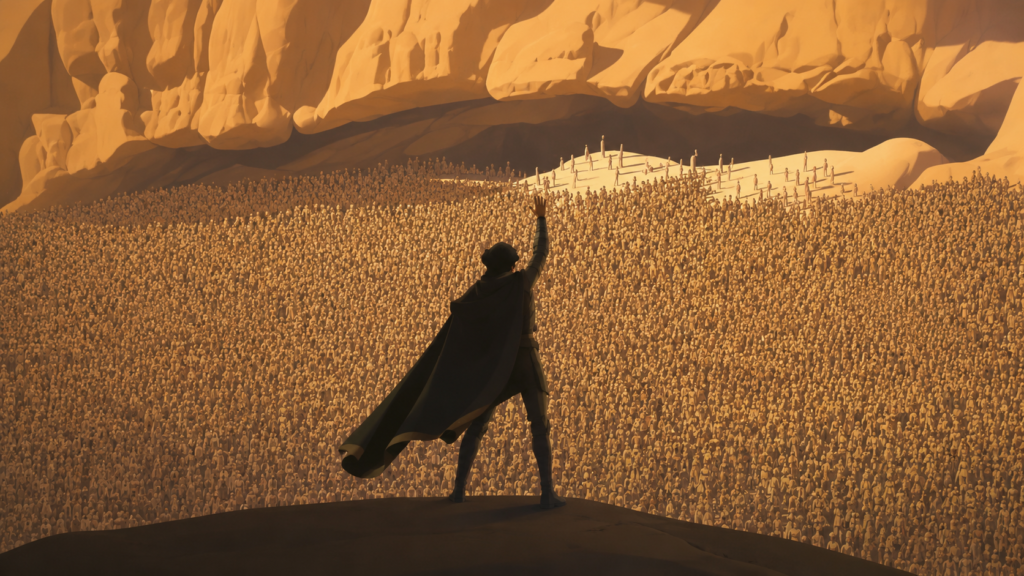
Paul Atreides begins exactly where many myths want their hero to begin.
He is young, gifted, disciplined, and born into a noble family that seems more humane than the forces around it. His father, Duke Leto, inspires loyalty instead of simply demanding obedience. His mother, Lady Jessica, has trained him in Bene Gesserit disciplines most men are never meant to learn.
Paul is also the product of a long genetic project the Bene Gesserit expected to control.
That is the first warning sign.
He is not merely a boy preparing to inherit a title. He is the accidental center of plans made before he was born.
When House Atreides is ordered to govern Arrakis, the move appears to be a promotion. In reality, it is a trap. The Emperor fears Duke Leto’s rising influence and secretly supports House Harkonnen, the Atreides family’s old enemy.
The trap closes. Leto dies. House Atreides falls. Paul and Jessica escape into the desert.
From there, the story seems to follow the shape of a classic rise.
Paul joins the Fremen. He learns their ways. He survives the desert. He becomes Muad’Dib. He leads resistance against the Harkonnens and the Emperor. He avenges his father and takes control of the empire.
On paper, it sounds like triumph.
In Dune, triumph is where the danger begins.
The Prophecy Was Never Innocent
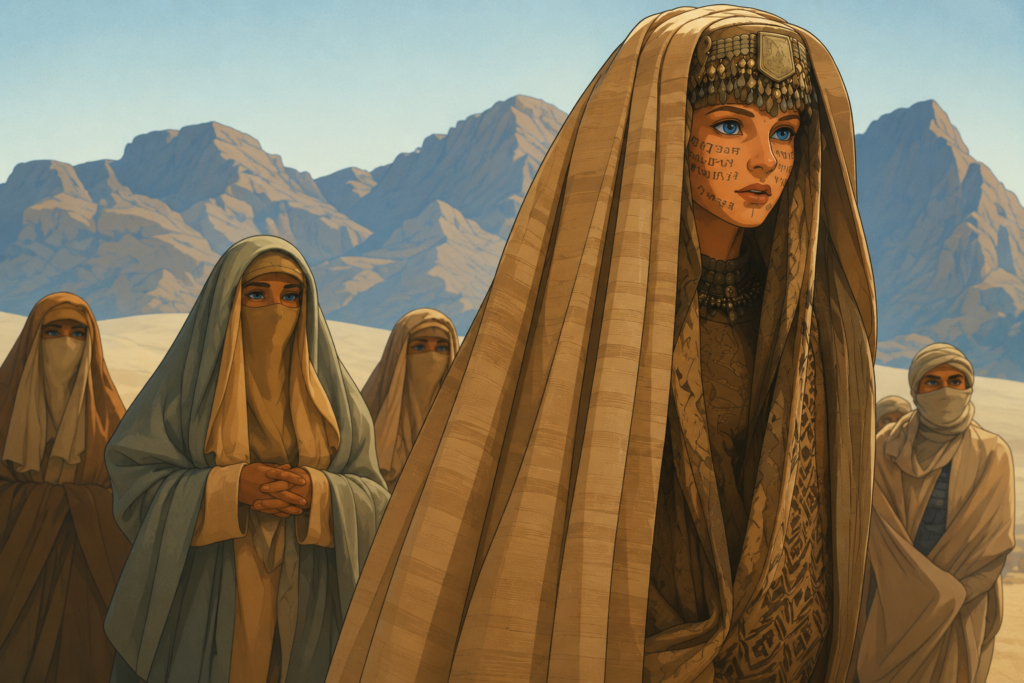
The Fremen already have legends about an outsider who will arrive with a Bene Gesserit mother and lead them toward liberation. Paul fits those legends with unnerving precision.
But one of Herbert’s sharpest ideas is that prophecy in Dune is not pure magic floating above politics. It has been prepared.
The Bene Gesserit’s Missionaria Protectiva spreads religious myths across vulnerable societies so members of the order can exploit those beliefs in moments of danger. Some of the prophecy surrounding Paul is not simply discovered. It has been planted.
Paul knows this.
That makes his rise more complicated. He is not merely mistaken for a messiah by people who do not understand him. He understands the power of the myth and steps into it.
At first, that choice can seem necessary. His family has been destroyed. The Fremen are oppressed. The Harkonnens are brutal. The Emperor is corrupt.
Every step can be defended in isolation.
Survive. Protect Jessica. Join the Fremen. Avenge Leto. Free Arrakis. Defeat the Emperor.
Together, those steps create something far harder to control.
A messiah with an army.
Villeneuve Made Paul More Frightened Than Triumphant
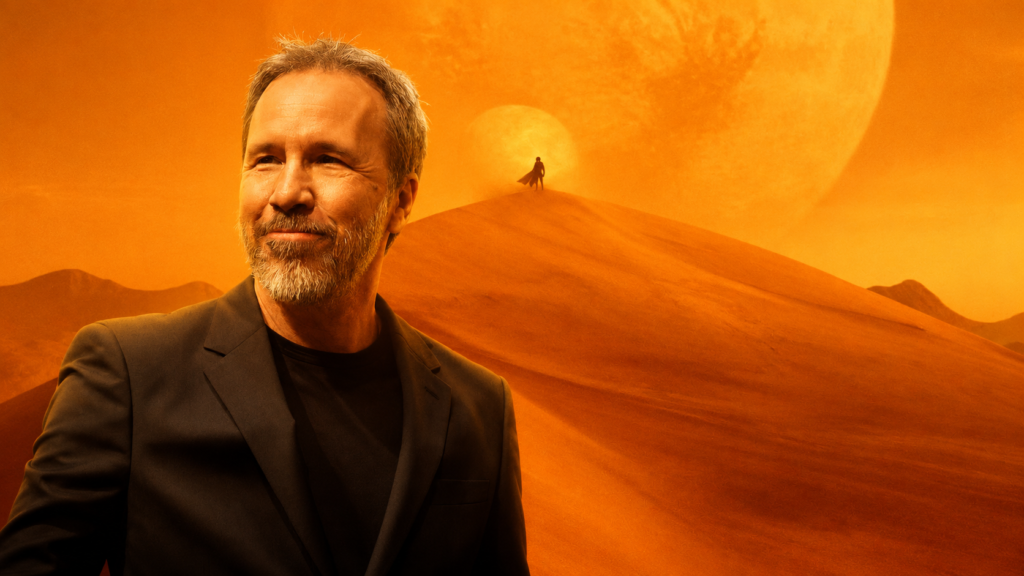
This is where Denis Villeneuve’s version becomes important.
David Lynch’s 1984 Dune races through nearly the entire first novel in a single movie. It explains the universe early, uses frequent internal voice-over, shows more of the Emperor and the Spacing Guild, and moves Paul toward his messianic victory with far less room to hesitate.
Villeneuve takes the opposite approach.
His Dune from 2021 covers only the first major movement of the novel. It ends with Paul stepping into Fremen life rather than already ruling it. The film does not try to explain every term. Mentats, Sardaukar, the Bene Gesserit, the Guild, and the deeper history of the Butlerian Jihad are often suggested through images rather than defined in speeches.
Lynch gives the audience a guidebook before the journey.
Villeneuve drops the audience in the desert and lets the world become legible through pressure.
That difference matters most with Paul.
Kyle MacLachlan’s Paul feels older, more composed, and more openly destined for power. Timothee Chalamet’s Paul is younger, more uncertain, and visibly afraid of what he may become. His visions are not clean prophecies. They are fragments, warnings, possible futures. Sometimes they mislead him. Sometimes they are emotionally true in ways he does not understand until later.
The result is a Paul who does not experience destiny as a crown waiting on a cushion.
He experiences it as a door closing behind him.
The Movies Leave Out Details, But They Keep the Warning
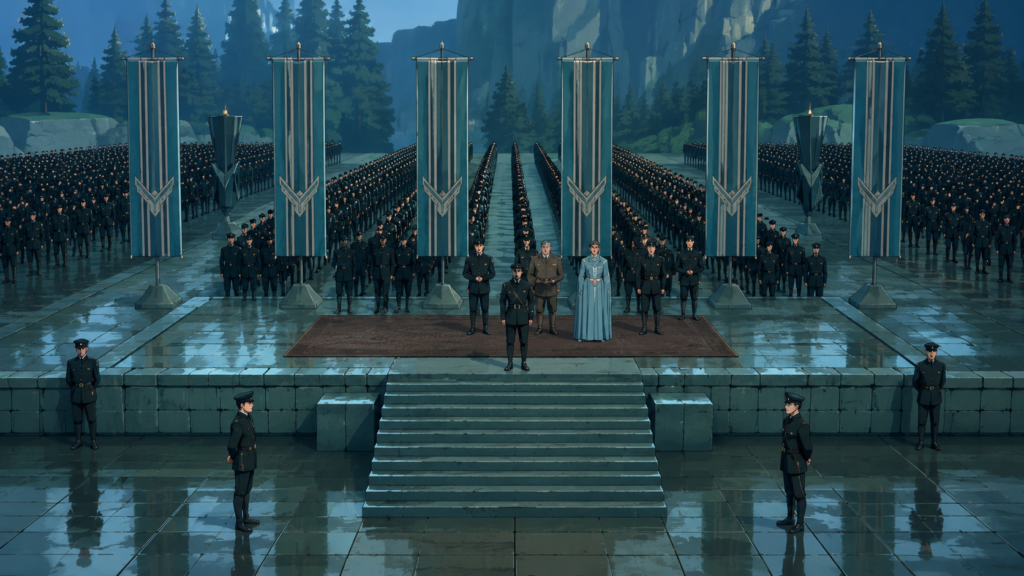
The books make Paul’s development more layered.
Novel Paul is not only trained by Jessica in Bene Gesserit methods. He is also shaped by Atreides politics, combat instruction, Mentat-style analysis, and exposure to spice. His power is not just mystical. It is the convergence of many human systems inside one person.
The films simplify that. They focus more heavily on his visions, his Bene Gesserit inheritance, his relationship with Jessica, his bond with Duke Leto, and the emotional terror of becoming a symbol.
Some book material is lost along the way. The dinner scene in Arrakeen, for example, is one of the novel’s great political sequences, but Villeneuve removes it to keep the film centered on Paul, Jessica, Leto, and the approaching collapse of House Atreides. The traitor mystery involving Jessica is also simplified. Paul’s Mentat training receives little emphasis. The Butlerian Jihad is not fully explained.
Those omissions matter.
But they also reveal Villeneuve’s strategy. He is not trying to turn the films into an illustrated encyclopedia. He is trying to make the audience feel the machinery closing around Paul.
The book gives us the calculations.
The film gives us the weight.
Part Three Is Where the Victory Starts to Rot
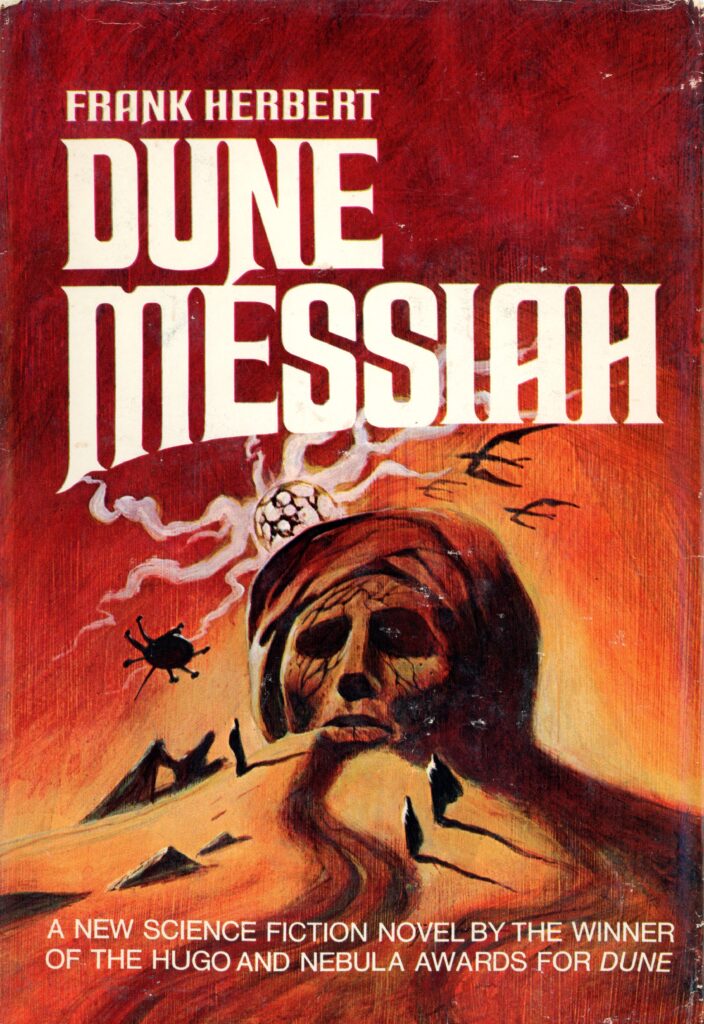
This is why Dune: Part Three should feel different.
Dune Messiah takes place after Paul’s rise, when the religious and political force built around Muad’Dib has spread far beyond Arrakis. Paul has more power than almost anyone in the known universe, but that power has not made him free.
It has made him central to everything.
That is the psychological horror under Dune Messiah. Paul is not simply a ruler making decisions from a throne. He is a man trapped inside the myth that helped him survive. The Fremen do not merely follow him as a commander. Many worship him as destiny in human form.
And once a leader becomes destiny, disagreement starts to look like heresy.
This is where Paul’s ascension becomes disturbing. He is not a mustache-twirling villain who suddenly decides to enjoy cruelty. He is worse than that, because his path remains understandable. He sees terrible futures. He believes he is choosing the least catastrophic route. He knows the violence around his name is monstrous. He also keeps ruling through the system that violence created.
That is not simple madness.
It is moral corrosion under impossible pressure.
Paul becomes a figure who can see too much, justify too much, and still fail to escape the consequences of what people believe about him. He is brilliant enough to understand the trap and powerful enough to deepen it.
The hero has not disappeared.
He has become politically radioactive.
The Earlier Adaptations Show Why Dune Is So Hard to Hold

Every adaptation of Dune reveals what the adapter thinks the story is.
Lynch’s 1984 film treats Dune as a strange, baroque space opera rushing toward prophetic fulfillment. It is dense, theatrical, visually unforgettable, and often blunt. It explains through narration, visions, exposition, grotesque imagery, and sudden leaps. It also makes choices that move away from Herbert, including the infamous weirding modules, sonic weapons that replace the novel’s Bene Gesserit combat discipline.
The 2000 miniseries Frank Herbert’s Dune had more time to follow the structure of the book and linger on politics. The 2003 miniseries Children of Dune went further, adapting material from Dune Messiah and Children of Dune. Those versions do not have Villeneuve’s cinematic scale, but they show something important: Dune often benefits from room.
Villeneuve’s films solve the problem through division and atmosphere. Instead of forcing the first novel into one movie, Dune and Dune: Part Two split Paul’s rise into two movements. The desert has space. Silence matters. Machines feel monumental. Rituals feel older than explanation. The Harkonnens do not need to shout to be terrifying. The Bene Gesserit do not need a lecture to seem dangerous.
That approach has one big advantage heading into Part Three.
The audience has already watched Paul become the figure Herbert wanted us to distrust.
Now the story can stop introducing the myth and start interrogating it.
The Books Go Further Than the Films Can
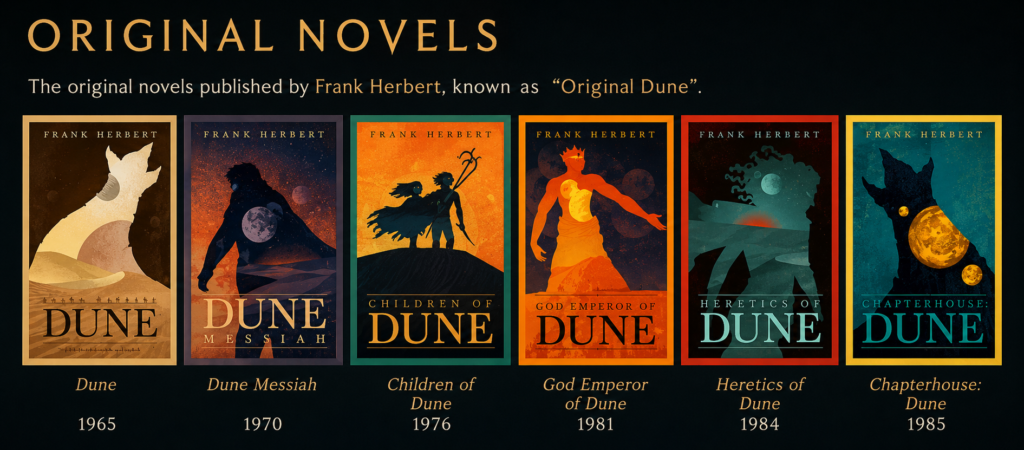
The original Dune saga does not stop with Paul’s rise, or even with Dune Messiah. Frank Herbert’s novels move through inheritance, prescience, ecological transformation, empire, religion, and the long-term survival of humanity.
But this article is not the place to unpack the full chain of later events. That wider saga deserves its own guide.
For Dune: Part Three, the essential point is simpler: Herbert was never only writing about a desert war.
He was writing about systems that promise certainty and slowly become prisons.
Machines can become a trap. Empires can become a trap. Prophecies can become a trap. Even a hero can become a trap if people stop questioning him.
Especially then.
What to Remember Before Dune: Part Three
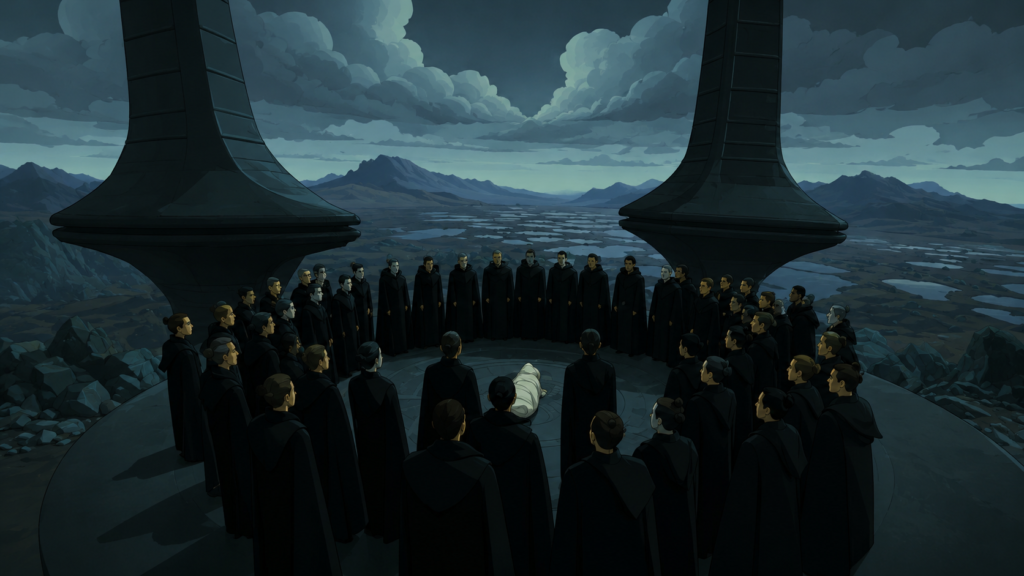
The minimum is this:
Paul Atreides did not simply win at the end of Dune: Part Two. He took control of the political and religious forces surrounding Arrakis. The old imperial order has been broken. The Fremen have become the center of a new power. The spice remains the substance that holds civilization together. Chani has seen enough to doubt what Paul is becoming.
And Paul himself has crossed the line from survivor to symbol.
That is the real setup for Dune: Part Three. Not just who sits on the throne. Not just who controls Arrakis. Not just whether the empire bends to Muad’Dib.
The question is what happens when a man becomes too powerful to be treated as a man.
A boy from Caladan survives a massacre, crosses the desert, becomes Muad’Dib, and wins the empire. In another kind of story, that would be the final image.
Frank Herbert understood it was the beginning of the warning.
Dune: Part Three is where the legend has to answer for what it created.
Sources
